Error!

Callicarpa

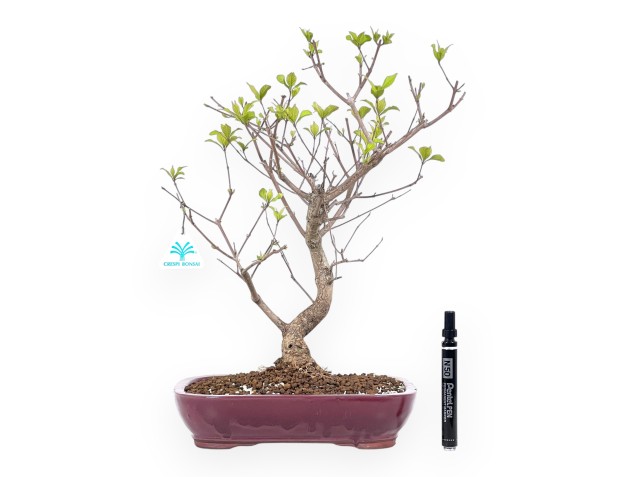
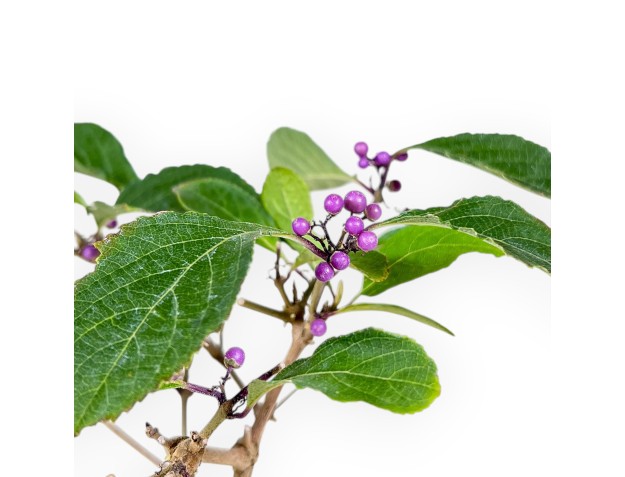
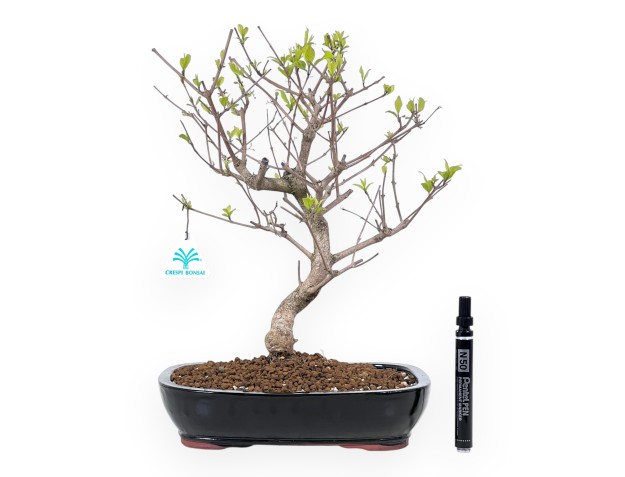
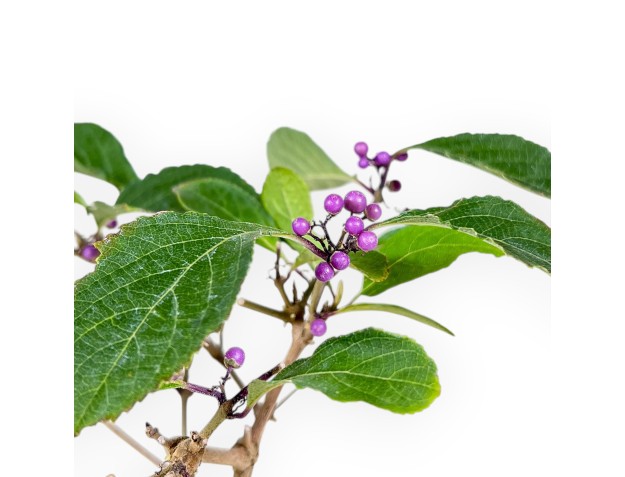
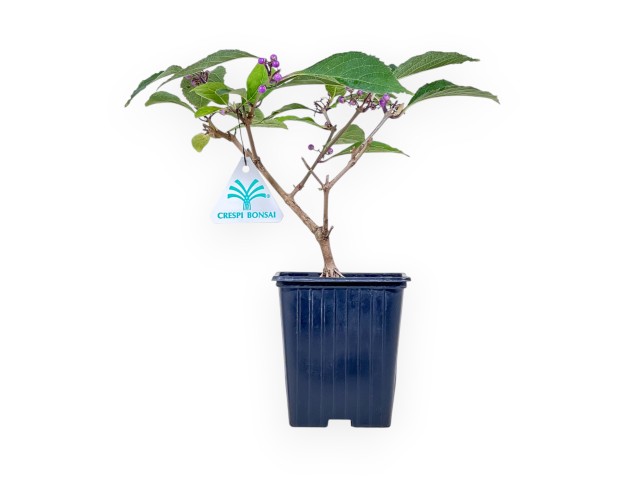
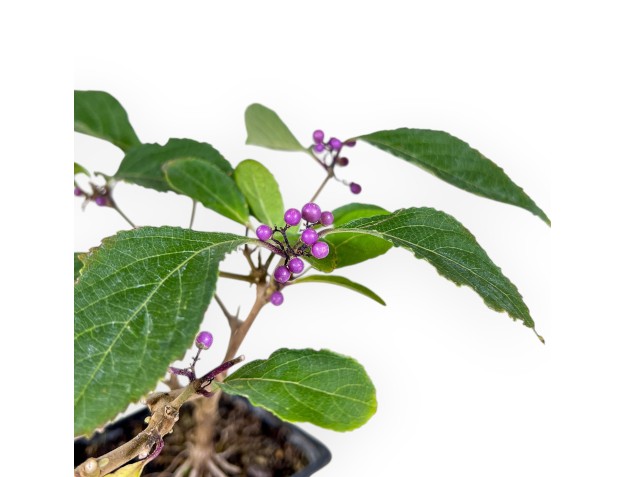
The Callicarpa, commonly called beautyberry, is an ornamental plant prized especially for its characteristic bright purple berries that appear in autumn and last until winter. Cultivated as a bonsai, it combines the elegance of the dense branching with the distinctiveness of the berries, creating a remarkable aesthetic effect during the cold season. It is a deciduous outdoor bonsai and its vigorous growth makes it suitable for both beginners and experts, offering satisfaction both in shaping and in flowering and fruiting.

Callicarpa bonsai prefers full sun exposure to ensure healthy growth and good flower and berry production. During spring and fall, it can safely be kept in full light, while in summer it is best to protect it during the hottest hours, especially in regions with very dry climates. In winter, it tolerates moderate cold, but temperatures below 43°F can damage the roots and younger branches, so it is advisable to place it in a cold greenhouse or sheltered area when frosts become persistent.

The common rule of watering whenever the soil feels dry to the touch is also ideal for Callicarpa, bearing in mind, however, that in hotter periods and in strong winds, it is necessary to water more frequently. In fact, in these cases, the soil often risks becoming completely dry. It is also important to bear in mind that both a lack of water and excess water can cause serious problems for the plant. More specifically, a lack of water causes the leaves to wilt and stunted growth, while excess water causes the tips of the leaves to turn black.

Repotting should be done every two or three years, preferably in early spring, before the growing season begins. This allows the substrate to be renewed and root growth to be controlled. It is important to use well-drained soil. During repotting, up to a third of the roots can be pruned, taking care not to damage the main roots. After repotting, it is advisable to protect the plant from direct sunlight for a few days to allow it to recover.

Pruning Callicarpa bonsai is an important practice for shaping the tree's structure and keeping it compact and harmonious. The main pruning is done in late winter or early spring, when the plant is still dormant but has already passed the greatest risk of frost. At this stage, you can shorten branches that are too long, remove dry, damaged, or poorly positioned branches, and establish the general shape of the crown. During the growing season, you can do light maintenance pruning, but it is best to avoid too drastic cuts so as not to compromise flowering and subsequent berry production. Always use sharp, disinfected tools to reduce the risk of infection.

Pinching is essential for maintaining the compact shape of the bonsai and stimulating fine, dense branching. New shoots should be cut when they have produced 5 or 6 leaves, leaving 2 or 3. This process helps to distribute sap more evenly and control excessive branch growth. It is important not to pinch too late in the season, so as not to weaken the plant in preparation for winter. When pinching, you can also remove messy or crossed branches to promote a more harmonious structure.

Callicarpa can be shaped by wiring, but with a certain delicacy. Young branches are flexible and bend easily, but the bark is thin and can mark quickly. It is advisable to wrap the branches in spring or fall, avoiding periods of frost or strong summer growth. The wire should be checked every 3-4 weeks to prevent it from leaving permanent marks.

During the growing season, Callicarpa bonsai needs constant nourishment to support leaf development and subsequent flowering. A balanced organic or liquid fertilizer (e.g., 10-10-10) is recommended every two weeks from April to September. In autumn, you can switch to a low-nitrogen fertilizer (richer in phosphorus and potassium) to promote branch lignification and the production of characteristic berries. During winter, when the plant is dormant, it is best to suspend fertilization, as in summer.

Callicarpa bonsai is a relatively hardy plant, but like all potted plants, it requires constant attention. It is important to monitor for pests such as aphids and scale insects, especially in spring and summer. You can treat them with soft soap or vegetable oils, avoiding overly aggressive products. Good ventilation, adequate exposure, and cleaning of dry leaves help prevent fungal diseases.

Advice on:
Location

Callicarpa bonsai prefers full sun exposure to ensure healthy growth and good flower and berry production. During spring and fall, it can safely be kept in full light, while in summer it is best to protect it during the hottest hours, especially in regions with very dry climates. In winter, it tolerates moderate cold, but temperatures below 43°F can damage the roots and younger branches, so it is advisable to place it in a cold greenhouse or sheltered area when frosts become persistent.

Watering

The common rule of watering whenever the soil feels dry to the touch is also ideal for Callicarpa, bearing in mind, however, that in hotter periods and in strong winds, it is necessary to water more frequently. In fact, in these cases, the soil often risks becoming completely dry. It is also important to bear in mind that both a lack of water and excess water can cause serious problems for the plant. More specifically, a lack of water causes the leaves to wilt and stunted growth, while excess water causes the tips of the leaves to turn black.

Repotting

Repotting should be done every two or three years, preferably in early spring, before the growing season begins. This allows the substrate to be renewed and root growth to be controlled. It is important to use well-drained soil. During repotting, up to a third of the roots can be pruned, taking care not to damage the main roots. After repotting, it is advisable to protect the plant from direct sunlight for a few days to allow it to recover.

Pruning

Pruning Callicarpa bonsai is an important practice for shaping the tree's structure and keeping it compact and harmonious. The main pruning is done in late winter or early spring, when the plant is still dormant but has already passed the greatest risk of frost. At this stage, you can shorten branches that are too long, remove dry, damaged, or poorly positioned branches, and establish the general shape of the crown. During the growing season, you can do light maintenance pruning, but it is best to avoid too drastic cuts so as not to compromise flowering and subsequent berry production. Always use sharp, disinfected tools to reduce the risk of infection.

Pinching

Pinching is essential for maintaining the compact shape of the bonsai and stimulating fine, dense branching. New shoots should be cut when they have produced 5 or 6 leaves, leaving 2 or 3. This process helps to distribute sap more evenly and control excessive branch growth. It is important not to pinch too late in the season, so as not to weaken the plant in preparation for winter. When pinching, you can also remove messy or crossed branches to promote a more harmonious structure.

Wiring

Callicarpa can be shaped by wiring, but with a certain delicacy. Young branches are flexible and bend easily, but the bark is thin and can mark quickly. It is advisable to wrap the branches in spring or fall, avoiding periods of frost or strong summer growth. The wire should be checked every 3-4 weeks to prevent it from leaving permanent marks.

Fertilization

During the growing season, Callicarpa bonsai needs constant nourishment to support leaf development and subsequent flowering. A balanced organic or liquid fertilizer (e.g., 10-10-10) is recommended every two weeks from April to September. In autumn, you can switch to a low-nitrogen fertilizer (richer in phosphorus and potassium) to promote branch lignification and the production of characteristic berries. During winter, when the plant is dormant, it is best to suspend fertilization, as in summer.

Care

Callicarpa bonsai is a relatively hardy plant, but like all potted plants, it requires constant attention. It is important to monitor for pests such as aphids and scale insects, especially in spring and summer. You can treat them with soft soap or vegetable oils, avoiding overly aggressive products. Good ventilation, adequate exposure, and cleaning of dry leaves help prevent fungal diseases.

Product added to wishlist