Error!

Celtis

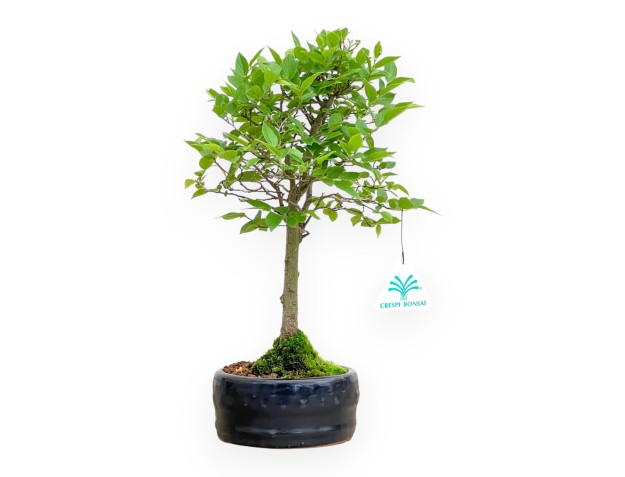
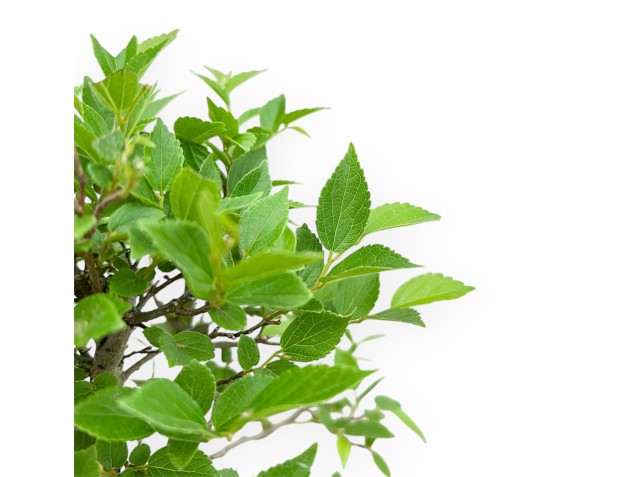
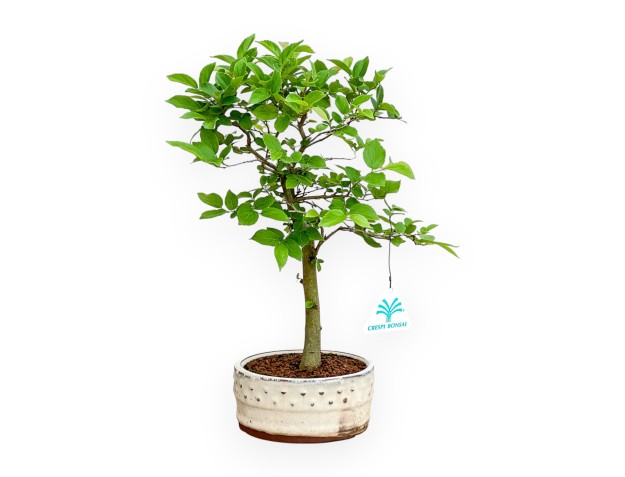
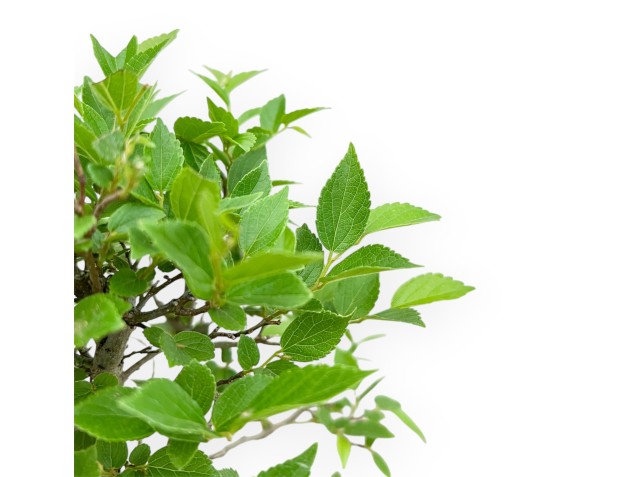
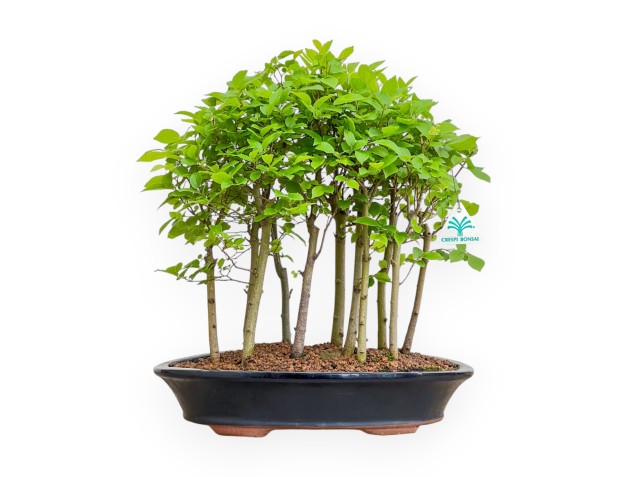
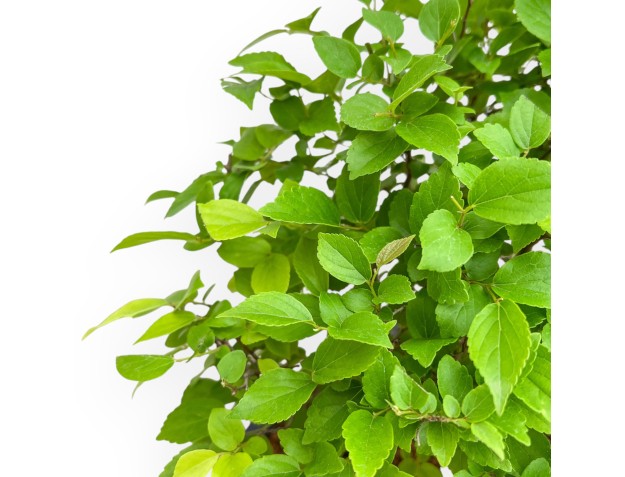
Celtis, also known as hackberry, is a deciduous tree belonging to the Ulmaceae family, the same group as the elm. The most common species in bonsai are Celtis sinensis (Chinese) and Celtis australis (European), both of which are characterised by vigorous growth, thin ovate leaves and a good response to pruning. The Celtis is highly valued for its elegant habit, the wrinkled bark that develops with age and the dense branching, which allows for refined structures over time. It is a very hardy plant, tolerates pruning well and adapts easily to different bonsai styles, especially informal upright (moyogi), upside-down broom (hokidachi) and grove (yose-ue). It is an excellent choice for both beginners and experienced bonsai growers, with fast but well controllable growth. It is a species that can be grown outdoors all year round.

Celtis bonsai should be grown outdoors all year round, in a sunny and well-ventilated position. It loves full light, which stimulates compact growth and good foliage coloration. During the summer, in very hot and dry regions, it can benefit from light shading during the middle of the day. In winter, it tolerates low temperatures, but in harsh climates, it is advisable to protect it in a cold greenhouse or in a sheltered position, especially if the pot is small.

The common rule of watering whenever the soil feels dry to the touch is also ideal for Celtis, bearing in mind, however, that in hotter periods and in strong winds, it is necessary to water more frequently. In fact, in these cases, the soil often risks becoming completely dry. It is also important to bear in mind that both a lack and an excess of water can cause serious imbalances in the plant. More specifically, a lack of water causes the leaves to wilt and stunted growth, while an excess causes the leaves to blacken at the tips.

Repotting should be done every 2-3 years, in spring, before the growing season begins. Celtis has a robust and dense root system, which tolerates pruning quite well. When repotting, up to a third of the roots can be removed, but it is always best to do so gradually. The ideal substrate is well-drained. After repotting, it is advisable to keep the plant in a shaded place for a few days, avoiding sudden changes in temperature and direct wind.

Structural pruning is carried out in late winter or early spring, before the new shoots appear. At this stage, the line of the trunk is defined and poorly positioned, dry or inward-growing branches are removed. Celtis tolerates vigorous pruning well and often produces new shoots even from old wood. During the growing season, light maintenance pruning can be carried out, especially to correct the direction of the branches and improve the conicity of the branching. In the case of larger cuts, it is advisable to use healing mastic.

Celtis bonsai tend to produce long, rapid shoots, especially in spring. Pinching serves to keep the crown compact and stimulate fine branching. When the new shoots have produced 5-6 leaves, you can intervene by leaving only 2 or 3. The plant also responds well to multiple pinching cycles during the growing season. It is important to observe the growth rate: in particularly vigorous years, it may be necessary to pinch more frequently. Pinching is also useful for maintaining balanced proportions between the canopy and the trunk.

Wrapping is possible, but must be done carefully and regularly. The young branches of Celtis are quite flexible, but the bark is thin and can be easily marked. Wrapping should preferably be done in autumn or early spring, when there are no leaves and the structure is more visible. For more important settings, wrapping can be combined with pruning.

Celtis is a vigorous plant that benefits from regular fertilization, especially during the growing season. From March to October, it is useful to apply a balanced fertilizer (organic or liquid) every 15-20 days. In the early stages of development, a fertilizer richer in nitrogen can be used, while in autumn it is preferable to switch to fertilizers with more potassium and phosphorus to promote lignification and maturation of the branches. During winter, fertilization is not necessary, nor is it during the summer season.

Celtis bonsai is generally hardy and healthy, but in some conditions it can be susceptible to attacks by aphids, mites, and scale insects, especially if grown in poorly ventilated environments. It is important to check the underside of the leaves regularly and take prompt action with natural remedies or specific treatments in case of infestation. Good exposure, proper watering, and cleaning the pot help prevent problems.

Advice on:
Location

Celtis bonsai should be grown outdoors all year round, in a sunny and well-ventilated position. It loves full light, which stimulates compact growth and good foliage coloration. During the summer, in very hot and dry regions, it can benefit from light shading during the middle of the day. In winter, it tolerates low temperatures, but in harsh climates, it is advisable to protect it in a cold greenhouse or in a sheltered position, especially if the pot is small.

Watering

The common rule of watering whenever the soil feels dry to the touch is also ideal for Celtis, bearing in mind, however, that in hotter periods and in strong winds, it is necessary to water more frequently. In fact, in these cases, the soil often risks becoming completely dry. It is also important to bear in mind that both a lack and an excess of water can cause serious imbalances in the plant. More specifically, a lack of water causes the leaves to wilt and stunted growth, while an excess causes the leaves to blacken at the tips.

Repotting

Repotting should be done every 2-3 years, in spring, before the growing season begins. Celtis has a robust and dense root system, which tolerates pruning quite well. When repotting, up to a third of the roots can be removed, but it is always best to do so gradually. The ideal substrate is well-drained. After repotting, it is advisable to keep the plant in a shaded place for a few days, avoiding sudden changes in temperature and direct wind.

Pruning

Structural pruning is carried out in late winter or early spring, before the new shoots appear. At this stage, the line of the trunk is defined and poorly positioned, dry or inward-growing branches are removed. Celtis tolerates vigorous pruning well and often produces new shoots even from old wood. During the growing season, light maintenance pruning can be carried out, especially to correct the direction of the branches and improve the conicity of the branching. In the case of larger cuts, it is advisable to use healing mastic.

Pinching

Celtis bonsai tend to produce long, rapid shoots, especially in spring. Pinching serves to keep the crown compact and stimulate fine branching. When the new shoots have produced 5-6 leaves, you can intervene by leaving only 2 or 3. The plant also responds well to multiple pinching cycles during the growing season. It is important to observe the growth rate: in particularly vigorous years, it may be necessary to pinch more frequently. Pinching is also useful for maintaining balanced proportions between the canopy and the trunk.

Wiring

Wrapping is possible, but must be done carefully and regularly. The young branches of Celtis are quite flexible, but the bark is thin and can be easily marked. Wrapping should preferably be done in autumn or early spring, when there are no leaves and the structure is more visible. For more important settings, wrapping can be combined with pruning.

Fertilization

Celtis is a vigorous plant that benefits from regular fertilization, especially during the growing season. From March to October, it is useful to apply a balanced fertilizer (organic or liquid) every 15-20 days. In the early stages of development, a fertilizer richer in nitrogen can be used, while in autumn it is preferable to switch to fertilizers with more potassium and phosphorus to promote lignification and maturation of the branches. During winter, fertilization is not necessary, nor is it during the summer season.

Care

Celtis bonsai is generally hardy and healthy, but in some conditions it can be susceptible to attacks by aphids, mites, and scale insects, especially if grown in poorly ventilated environments. It is important to check the underside of the leaves regularly and take prompt action with natural remedies or specific treatments in case of infestation. Good exposure, proper watering, and cleaning the pot help prevent problems.

Filter by
Categories
Price
Style
Height
Height without pot
Filter
Celtis Australis - European Nettle - 55 cm Celtis Australis - European Nettle - 55 cm 2
Available
Bonsai with deciduous leaves

Celtis Australis - European Nettle - 55 cm

Celtis
Z54AOI-6393
€254.55
Appearance may change according to the seasons Height without pot: 47 cm Trunk: 6 cm Nebari: 12 cm Glazed stoneware pot: 27,5 x 17,5 x H 8 cm
Bonsai with deciduous leaves

Celtis Australis - European Nettle - 32 cm

Celtis
C54MN-6611
€35.45
Appearance may change according to the seasons Bonsai are living beings and each one is different from the others, so the plant you'll receive will be similar but not the same as the one you see in the photo Height without pot: 27 cm - may vary with the vegetative growth of the plant Trunk: 1,5 cm Glazed stoneware pot: Ø 11,5 x H 5,5 cm
Bonsai with deciduous leaves

Celtis Australis - European Nettle - 32 cm

Celtis
C54MN-6610
€35.45
Appearance may change according to the seasons Bonsai are living beings and each one is different from the others, so the plant you'll receive will be similar but not the same as the one you see in the photo Height without pot: 27 cm - may vary with the vegetative growth of the plant Trunk: 1,5 cm Glazed stoneware pot: Ø 11,5 x H 5,5 cm
Celtis Australis - European Nettle - 43 cm Celtis Australis - European Nettle - 43 cm 2
  • -€30.00
Bonsai with deciduous leaves

Celtis Australis - European Nettle - 43 cm

Celtis
C54LNE-6617
€147.27 €177.27
Appearance may change according to the seasons Bonsai are living beings and each one is different from the others, so the plant you'll receive will be similar but not the same as the one you see in the photo Style: forest Height without pot: 36 cm - may vary with the vegetative growth of the plant Trunk: 1-1,5 cm Glazed stoneware pot: 33 x 25 x H 7 cm
Product added to wishlist