Error!

Nandina

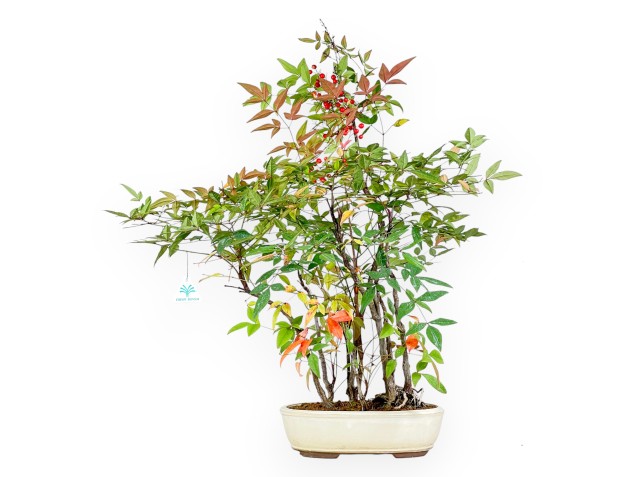
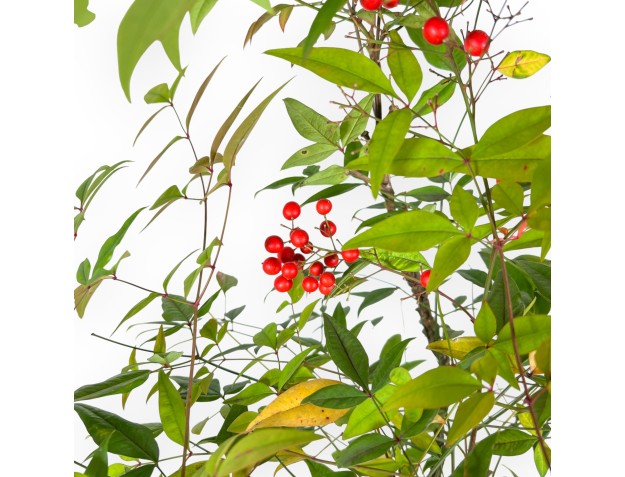
The Nandina domestica, also known as sacred bamboo, is a particularly popular species in the bonsai world for its elegance and ornamental value. Its light and harmonious habit, combined with finely compound leaves, gives the plant a delicate and refined appearance. Over the course of the year, the Nandina offers striking colour variations: the bright green of the vegetative season is succeeded by warm shades of deep red and orange, often accompanied small decorative berries that appear during the autumn and winter period. A very interesting species for its transformation during the seasons and capable of continuously expressing its ever-changing ornamental value.

The Nandina bonsai prefers a bright location to promote balanced growth and proper foliage color. It should be grown outdoors year-round, avoiding intense direct sunlight during the hottest hours of summer. It tolerates moderate cold well, but it is advisable to protect it from prolonged frosts, especially if grown in small pots.

The common watering rule, which dictates watering whenever the soil feels dry to the touch, is also ideal for the Nandina. However, consider that during hotter periods and in strong winds, watering is necessary more frequently. In these cases, the soil often risks remaining completely dry. It is also important to keep in mind that both a lack of water and an excess of water can cause serious problems for the plant.

The Nandina bonsai is generally repotted every 2–3 years, preferably in early spring, before the plant begins to grow again. During the operation, moderate root pruning can be performed, eliminating older roots and encouraging the development of fine roots. A well-draining, rich, yet balanced substrate is recommended.

Pruning is aimed at maintaining the bonsai's shape and encouraging orderly branching. It can be performed throughout the growing season, targeting overly long or untidy branches. Nandina responds well to light, gradual pruning, while drastic interventions should be avoided to avoid weakening the plant.

Pinching is useful for controlling growth and maintaining a compact crown. It is performed on new shoots, shortening them once they have developed 5-6 pairs of leaves. This practice promotes thickening and helps preserve the bonsai's proportions, respecting the species' natural growth habit.

Wiring can be applied carefully to shape or correct the structure of young branches. Nandina branches are relatively flexible but also delicate, so it's important to use wire of adequate thickness and check frequently to ensure it doesn't damage the bark. In many cases, proper pruning is sufficient to shape the tree.

Fertilization should be regular but not excessive. During spring and summer, a balanced organic fertilizer can be used, while in autumn, a product with a lower nitrogen content is preferable, which helps promote seasonal coloration and tissue maturation. Fertilization should be suspended in winter.

The Nandina bonsai is a relatively hardy species, but still requires constant attention. It's important to periodically check the condition of the foliage and substrate, intervening promptly in the event of water stress or pests. Proper exposure, a good balance of water and nutrients, and regular maintenance allow this bonsai to best express its natural elegance throughout the seasons.

Advice on:
Location

The Nandina bonsai prefers a bright location to promote balanced growth and proper foliage color. It should be grown outdoors year-round, avoiding intense direct sunlight during the hottest hours of summer. It tolerates moderate cold well, but it is advisable to protect it from prolonged frosts, especially if grown in small pots.

Watering

The common watering rule, which dictates watering whenever the soil feels dry to the touch, is also ideal for the Nandina. However, consider that during hotter periods and in strong winds, watering is necessary more frequently. In these cases, the soil often risks remaining completely dry. It is also important to keep in mind that both a lack of water and an excess of water can cause serious problems for the plant.

Repotting

The Nandina bonsai is generally repotted every 2–3 years, preferably in early spring, before the plant begins to grow again. During the operation, moderate root pruning can be performed, eliminating older roots and encouraging the development of fine roots. A well-draining, rich, yet balanced substrate is recommended.

Pruning

Pruning is aimed at maintaining the bonsai's shape and encouraging orderly branching. It can be performed throughout the growing season, targeting overly long or untidy branches. Nandina responds well to light, gradual pruning, while drastic interventions should be avoided to avoid weakening the plant.

Pinching

Pinching is useful for controlling growth and maintaining a compact crown. It is performed on new shoots, shortening them once they have developed 5-6 pairs of leaves. This practice promotes thickening and helps preserve the bonsai's proportions, respecting the species' natural growth habit.

Wiring

Wiring can be applied carefully to shape or correct the structure of young branches. Nandina branches are relatively flexible but also delicate, so it's important to use wire of adequate thickness and check frequently to ensure it doesn't damage the bark. In many cases, proper pruning is sufficient to shape the tree.

Fertilization

Fertilization should be regular but not excessive. During spring and summer, a balanced organic fertilizer can be used, while in autumn, a product with a lower nitrogen content is preferable, which helps promote seasonal coloration and tissue maturation. Fertilization should be suspended in winter.

Care

The Nandina bonsai is a relatively hardy species, but still requires constant attention. It's important to periodically check the condition of the foliage and substrate, intervening promptly in the event of water stress or pests. Proper exposure, a good balance of water and nutrients, and regular maintenance allow this bonsai to best express its natural elegance throughout the seasons.

Filter by
Categories
Price
Style
Origin
Height
Filter
Nandina bonsai 70 cm | Beige oval pot Nandina bonsai 70 cm | Beige oval pot 2
Available
Fruit bonsai

Nandina - 70 cm

Nandina
Y69ATE-7051
€240.91
Nandina bonsai characterized by a height without pot of 62 cm, and a trunk size of 2 cm. The plant is grown in an oval glazed stoneware pot whose dimensions are 26x21xH8 cm.
Product added to wishlist