Error!

Akebia

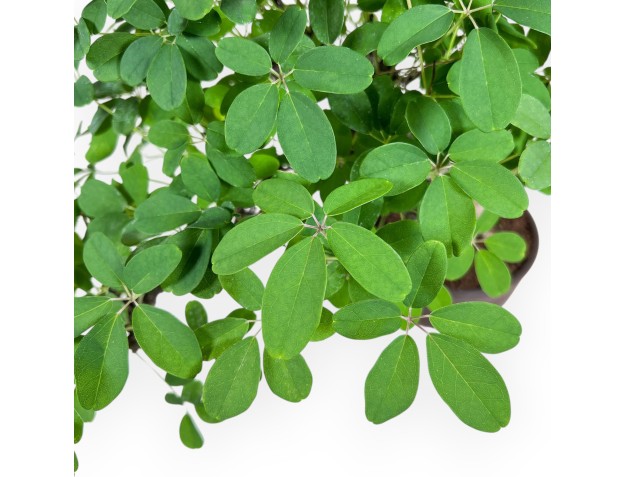
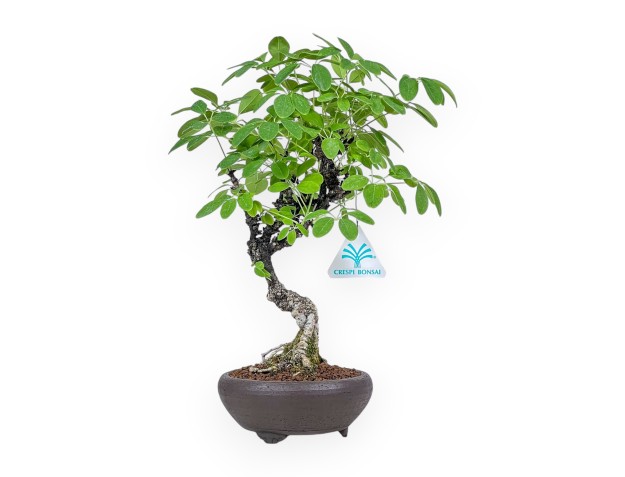
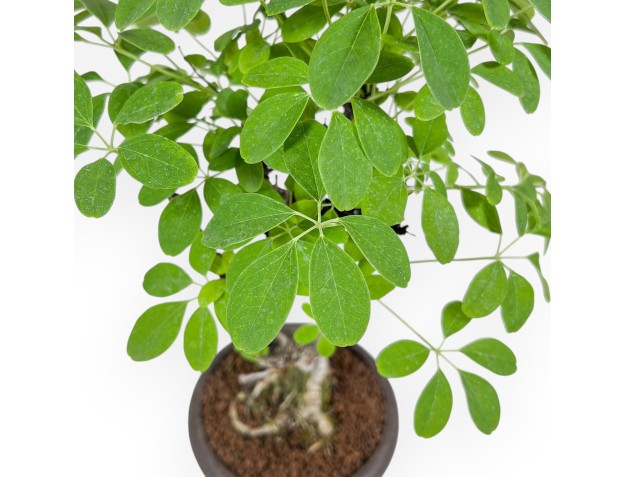
Native to China and Japan, Akebia quinata is a semi-evergreen climber with compound leaves consisting of five ovate-oblong leaflets. It flowers between April and May, producing small pink-purple flowers grouped in racemes: the male flowers at the base and the female flowers towards the tips. In summer, the flowers are followed by fruits: small pods containing soft pulp and countless tiny seeds.

Akebia bonsai prefers a sunny or semi-shaded position, where it can receive at least a few hours of direct sunlight per day. Good exposure promotes flowering and keeps the vegetation compact. It is a species that can be grown outdoors all year round; in winter, if temperatures drop below 43°F, it is advisable to protect it in a cold greenhouse or frost shelter. In summer, in very hot climates, it is preferable to shade it during the hottest hours to avoid dehydration and leaf burns.

The common rule of watering whenever the soil feels dry to the touch is also ideal for Akebia, bearing in mind, however, that in hotter periods and in strong winds, it is necessary to water more frequently. In fact, in these cases, the soil often risks becoming completely dry. It is also important to bear in mind that both a lack of water and excess water can cause serious damage to the plant. More specifically, a lack of water causes the leaves to wilt and stunted growth, while excess water causes the tips of the leaves to turn black.

Repotting should be done every 2–3 years, in spring, before active growth begins. This operation is useful for controlling the expansion of the roots, which tend to be very vigorous, and for renewing the soil. The roots can be pruned by up to a third of their total volume, keeping the finest and healthiest ones. The substrate must be well-drained but with a good capacity to retain moisture. After repotting, it is advisable to protect the plant from direct sunlight for about a week.

Pruning Akebia bonsai is essential to keep it in shape, as it tends to grow rapidly and extend its shoots in a disorderly manner. Structural pruning is carried out in spring, cutting back branches that are too vigorous or disorderly and maintaining the desired shape. During the growing season, light pruning can be done to contain growth and encourage branching. After flowering, in late spring or early summer, more severe pruning can be done to stimulate the production of new shoots. Regular pruning helps to keep the structure compact and improves the aesthetics of the bonsai.

Pinching is needed to contain growth and stimulate finer branching. Akebia produces new shoots very quickly, especially in spring and summer, so it is necessary to prune often. You can prune by shortening the new shoots when they have developed 4–5 leaves, leaving 2–3 to maintain a compact shape. This operation should be repeated regularly during the active season, always using sharp scissors and making clean cuts. Constant pruning also helps to balance the distribution of sap and prevent some areas from growing too much at the expense of others.

Akebia has flexible branches that lend themselves well to training, especially when young. Wire can be applied in spring or fall, shaping the shoots to define the structure and direction of growth. However, rapid growth requires frequent checks, as the wire can easily mark the bark in a short time. Alternatively, to avoid damage, you can use tie rods or light ties to guide the branches. Being a climbing species, Akebia naturally tends to twine, so twining can also take advantage of this characteristic to create natural and harmonious movements.

Being a vigorous plant, Akebia bonsai needs regular fertilization throughout the growing season. In spring, you can use a fertilizer richer in nitrogen to stimulate growth, while in early autumn it is better to opt for a fertilizer with more phosphorus and potassium to promote lignification and flowering the following year. Avoid fertilizing in winter and summer, when the plant slows down its activity.

Akebia bonsai are generally hardy, but can be prone to problems if neglected. The leaves can turn yellow due to overwatering or nutritional deficiencies, while aphids and mites can attack tender shoots in spring. Good air circulation, proper watering, and balanced nutrition are the basis for keeping it healthy. Flowering, with its fragrant blooms, is one of the most beautiful moments and occurs in spring, provided the plant has received enough light and care throughout the year. In autumn, some varieties may also develop decorative fruits.

Advice on:
Location

Akebia bonsai prefers a sunny or semi-shaded position, where it can receive at least a few hours of direct sunlight per day. Good exposure promotes flowering and keeps the vegetation compact. It is a species that can be grown outdoors all year round; in winter, if temperatures drop below 43°F, it is advisable to protect it in a cold greenhouse or frost shelter. In summer, in very hot climates, it is preferable to shade it during the hottest hours to avoid dehydration and leaf burns.

Watering

The common rule of watering whenever the soil feels dry to the touch is also ideal for Akebia, bearing in mind, however, that in hotter periods and in strong winds, it is necessary to water more frequently. In fact, in these cases, the soil often risks becoming completely dry. It is also important to bear in mind that both a lack of water and excess water can cause serious damage to the plant. More specifically, a lack of water causes the leaves to wilt and stunted growth, while excess water causes the tips of the leaves to turn black.

Repotting

Repotting should be done every 2–3 years, in spring, before active growth begins. This operation is useful for controlling the expansion of the roots, which tend to be very vigorous, and for renewing the soil. The roots can be pruned by up to a third of their total volume, keeping the finest and healthiest ones. The substrate must be well-drained but with a good capacity to retain moisture. After repotting, it is advisable to protect the plant from direct sunlight for about a week.

Pruning

Pruning Akebia bonsai is essential to keep it in shape, as it tends to grow rapidly and extend its shoots in a disorderly manner. Structural pruning is carried out in spring, cutting back branches that are too vigorous or disorderly and maintaining the desired shape. During the growing season, light pruning can be done to contain growth and encourage branching. After flowering, in late spring or early summer, more severe pruning can be done to stimulate the production of new shoots. Regular pruning helps to keep the structure compact and improves the aesthetics of the bonsai.

Pinching

Pinching is needed to contain growth and stimulate finer branching. Akebia produces new shoots very quickly, especially in spring and summer, so it is necessary to prune often. You can prune by shortening the new shoots when they have developed 4–5 leaves, leaving 2–3 to maintain a compact shape. This operation should be repeated regularly during the active season, always using sharp scissors and making clean cuts. Constant pruning also helps to balance the distribution of sap and prevent some areas from growing too much at the expense of others.

Wiring

Akebia has flexible branches that lend themselves well to training, especially when young. Wire can be applied in spring or fall, shaping the shoots to define the structure and direction of growth. However, rapid growth requires frequent checks, as the wire can easily mark the bark in a short time. Alternatively, to avoid damage, you can use tie rods or light ties to guide the branches. Being a climbing species, Akebia naturally tends to twine, so twining can also take advantage of this characteristic to create natural and harmonious movements.

Fertilization

Being a vigorous plant, Akebia bonsai needs regular fertilization throughout the growing season. In spring, you can use a fertilizer richer in nitrogen to stimulate growth, while in early autumn it is better to opt for a fertilizer with more phosphorus and potassium to promote lignification and flowering the following year. Avoid fertilizing in winter and summer, when the plant slows down its activity.

Care

Akebia bonsai are generally hardy, but can be prone to problems if neglected. The leaves can turn yellow due to overwatering or nutritional deficiencies, while aphids and mites can attack tender shoots in spring. Good air circulation, proper watering, and balanced nutrition are the basis for keeping it healthy. Flowering, with its fragrant blooms, is one of the most beautiful moments and occurs in spring, provided the plant has received enough light and care throughout the year. In autumn, some varieties may also develop decorative fruits.

Filter by
Categories
Price
Style
Origin
Height
Height without pot
Filter
Akebia quinata - Five-leaf akebia - 19 cm Akebia quinata - Five-leaf akebia - 19 cm 2
Available
Fruit bonsai

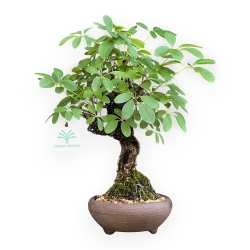
Akebia quinata - Five-leaf akebia - 19 cm

Akebia
Y40MOI
€345.45
Height (with pot): 19 cm Age: 25 years Shohin The bonsai is leafless in winter The photo was taken in january Akebia quinata
Akebia Quinata - 32 cm Akebia Quinata - 32 cm 2
Available
Fruit bonsai

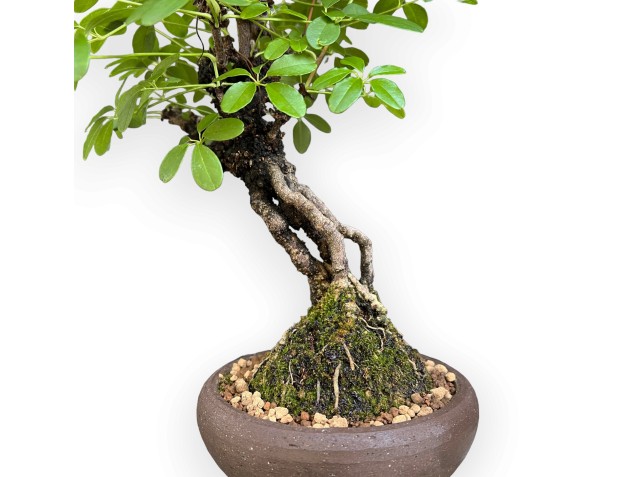
Akebia Quinata - 32 cm

Akebia
Y40AMO-5730
€216.36
Appearance may change according to the seasons Style: exposed roots Height without pot: 27 cm Trunk: 2 cm Nebari: 7 cm Unglazed stoneware pot: Ø 12 x H 5 cm
Akebia Quinata - 28 cm Akebia Quinata - 28 cm 2
Available
Fruit bonsai

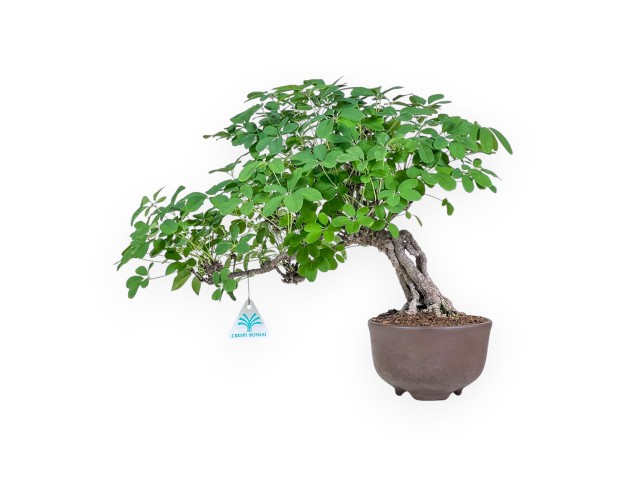
Akebia Quinata - 28 cm

Akebia
Y40AMO-5938
€216.36
Appearance may change according to the seasons Style: exposed roots Height without pot: 23 cm Trunk: 1,5 cm Nebari: 3,5 cm Unglazed stoneware pot: Ø 12 x H 5 cm
Raw Bonsai

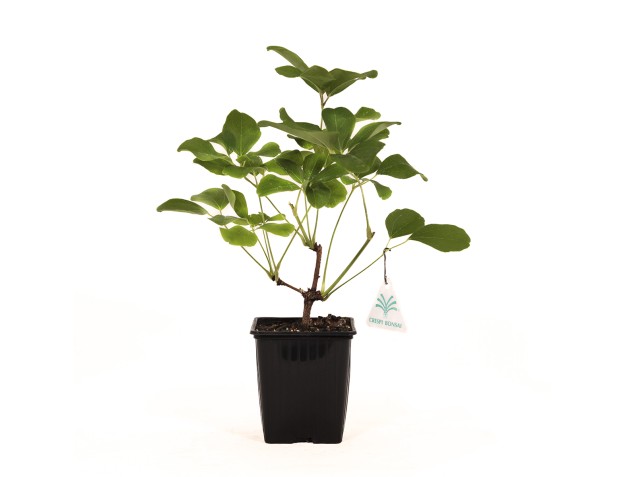
Akebia Quinata - 32 cm

Akebia
Z99LA/N-4
€11.73
To work Appearance may change according to the seasons Bonsai are living beings and each one is different from the others, so the plant you receive will be very similar but not the same as the one you see in the photograph Height (with pot): 32 cm - may vary with the vegetative growth of the plant
Product added to wishlist