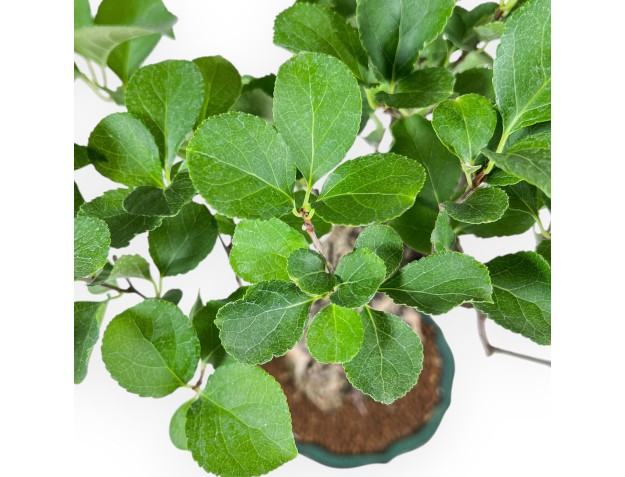
Celastrus
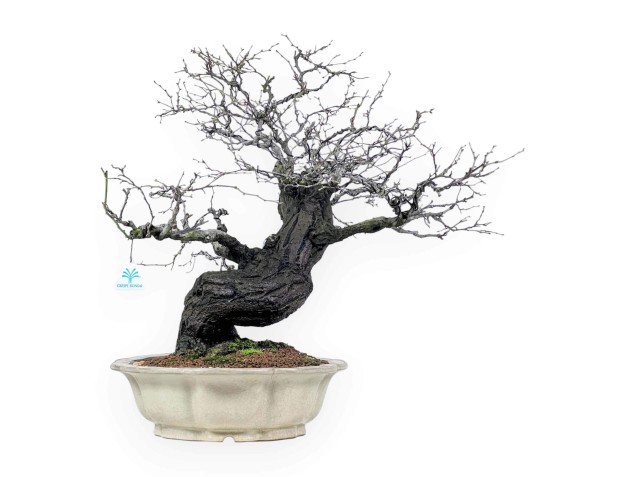
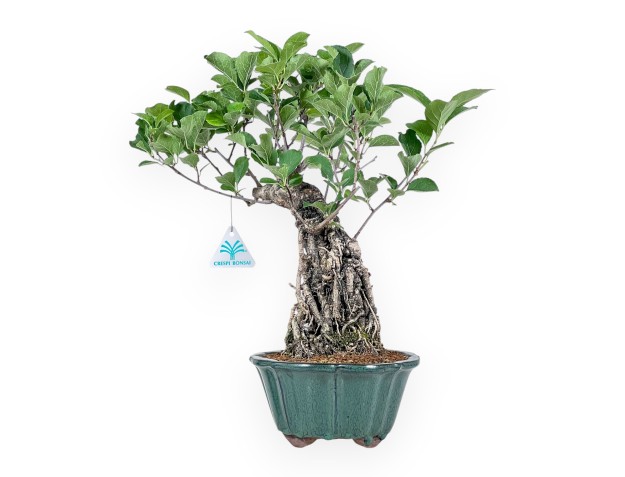
Celastrus orbiculatus, commonly known as Japanese vine or Oriental vine, is a deciduous climbing plant belonging to the Celastraceae family. Native to East Asia, it is prized for its vigorous habit, the harmonious shape of its leaves and its spectacular autumn colouring, which varies from golden yellow to deep orange. In addition, in autumn, the plant is enriched with small decorative berries enclosed in yellow/orange capsules which, when opened, show the red seeds, offering considerable ornamental value. Cultivated as a bonsai, Celastrus orbiculatus lends itself to a variety of stylistic settings, although its climbing nature makes it ideal for arrangements that evoke the elegance and spontaneity of natural growth (e.g. exposed-root and semi-cascade). It is a hardy and adaptable species, suitable for both novice and experienced bonsaists, who appreciate its quick response to growing and shaping techniques.
Celastrus orbiculatus is an outdoor species and has to be grown outdoors year-round. However, during the summer, in particularly hot climates, it is advisable to protect it from the intense midday sun to prevent the leaves from scorching. In the autumn and winter months, being a hardy plant, it tolerates low temperatures well, but in the event of prolonged frosts or icy winds, it is advisable to protect the roots with a hedge or temporarily move the bonsai to a sheltered area. Fresh air and good ventilation are essential for preventing fungal diseases and maintaining the plant's health.
The common watering rule, which dictates watering whenever the soil feels dry to the touch, is also ideal for Celastrus. However, consider that during hotter periods and in strong winds, watering is necessary more frequently. Often, in these cases, the soil risks remaining completely dry. It's also important to keep in mind that both a lack of water and an excess of it can cause serious problems for the plant. Specifically, a lack of water causes drooping leaves and stunted growth; excess water causes the leaves to blacken at the apical tips.
Repotting should be done every two or three years, preferably in spring, before the plant begins to grow again. This procedure allows the substrate to be renewed and root development to be controlled. During the process, some of the old soil is carefully removed and any long or damaged roots are shortened. The new substrate must be well-draining but capable of retaining moderate moisture; a mixture of equal parts akadama and pumice is an ideal combination. After repotting, it's advisable to protect the plant from direct sunlight for one to two weeks, so it can recover without excessive stress.
Pruning is an important part of caring for the Celastrus orbiculatus bonsai, as it helps maintain a balanced shape and promotes branching. Major pruning is performed in late winter or early spring, before the plant begins to grow again, removing overly vigorous or untidy branches and shortening those that disrupt the overall shape. During the summer, when the plant grows rapidly, small containment prunings can be performed to maintain a harmonious silhouette. It is important to use sharp and disinfected tools to avoid lacerations and promote rapid healing of cuts.
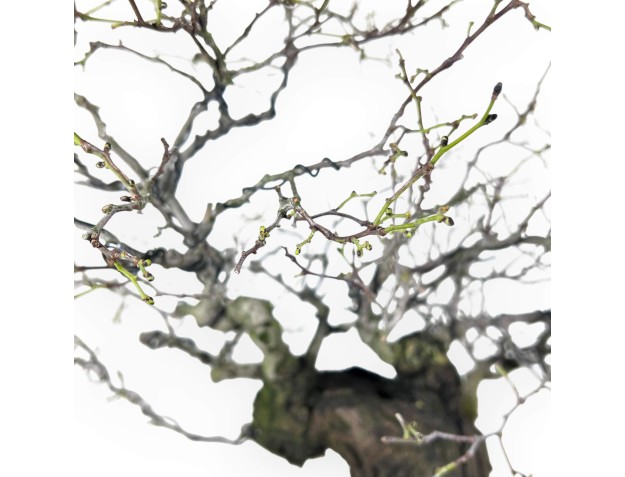
Pinching helps to maintain the crown's compactness and proportion, while also encouraging fine branching. When the new shoots have developed 5–6 leaves, they are shortened, leaving only 2–3. This procedure, repeated several times during the growing season, helps to achieve a denser and more regular structure, contributing to a balanced and harmonious bonsai. Pinching must be done gently, preferably with your fingers or fine-tipped scissors, to avoid damaging tender shoots.
Wiring is a useful technique for shaping branches and directing their growth according to the desired style. It can be done in spring or fall, when the branches are more flexible and less prone to breakage. Use copper or aluminum wire, wrapping it carefully and without overtightening. Since Celastrus orbiculatus grows rapidly, it is essential to check the wrapped branches frequently, removing the wire as soon as it begins to mark the bark. Bending operations must be gradual and well-planned to avoid compromising the health of the branches.
The Celastrus orbiculatus bonsai requires regular fertilization during the growing season, from spring to fall, excluding summer. Slow-release organic fertilizers or liquid fertilizers diluted in the irrigation water can be used every two or three weeks. During the spring, nitrogen-rich products are preferred to stimulate vegetative growth, while after flowering, a fertilizer with a higher phosphorus and potassium content is preferable, which promotes berry production and wood maturation. During the winter season, when the plant enters a dormant state, fertilization should be suspended until spring.
Celastrus orbiculatus is a generally hardy bonsai and is not prone to pests or diseases, but it is always a good idea to perform periodic checks, especially during the summer. Aphids and scale insects can sometimes attack the younger parts, but they can be easily removed with natural remedies such as soft soap or neem oil. Good ventilation and exposure to natural light help keep the plant healthy and vigorous. In winter or, if temperatures drop below -5°C, it's advisable to protect the pot with non-woven fabric or place it in a sheltered area to avoid damaging the roots. With constant care and a little attention, the Celastrus orbiculatus transforms into a charming and characterful bonsai, capable of offering beauty year-round.
Celastrus orbiculatus is an outdoor species and has to be grown outdoors year-round. However, during the summer, in particularly hot climates, it is advisable to protect it from the intense midday sun to prevent the leaves from scorching. In the autumn and winter months, being a hardy plant, it tolerates low temperatures well, but in the event of prolonged frosts or icy winds, it is advisable to protect the roots with a hedge or temporarily move the bonsai to a sheltered area. Fresh air and good ventilation are essential for preventing fungal diseases and maintaining the plant's health.
The common watering rule, which dictates watering whenever the soil feels dry to the touch, is also ideal for Celastrus. However, consider that during hotter periods and in strong winds, watering is necessary more frequently. Often, in these cases, the soil risks remaining completely dry. It's also important to keep in mind that both a lack of water and an excess of it can cause serious problems for the plant. Specifically, a lack of water causes drooping leaves and stunted growth; excess water causes the leaves to blacken at the apical tips.
Repotting should be done every two or three years, preferably in spring, before the plant begins to grow again. This procedure allows the substrate to be renewed and root development to be controlled. During the process, some of the old soil is carefully removed and any long or damaged roots are shortened. The new substrate must be well-draining but capable of retaining moderate moisture; a mixture of equal parts akadama and pumice is an ideal combination. After repotting, it's advisable to protect the plant from direct sunlight for one to two weeks, so it can recover without excessive stress.
Pruning is an important part of caring for the Celastrus orbiculatus bonsai, as it helps maintain a balanced shape and promotes branching. Major pruning is performed in late winter or early spring, before the plant begins to grow again, removing overly vigorous or untidy branches and shortening those that disrupt the overall shape. During the summer, when the plant grows rapidly, small containment prunings can be performed to maintain a harmonious silhouette. It is important to use sharp and disinfected tools to avoid lacerations and promote rapid healing of cuts.
Pinching helps to maintain the crown's compactness and proportion, while also encouraging fine branching. When the new shoots have developed 5–6 leaves, they are shortened, leaving only 2–3. This procedure, repeated several times during the growing season, helps to achieve a denser and more regular structure, contributing to a balanced and harmonious bonsai. Pinching must be done gently, preferably with your fingers or fine-tipped scissors, to avoid damaging tender shoots.
Wiring is a useful technique for shaping branches and directing their growth according to the desired style. It can be done in spring or fall, when the branches are more flexible and less prone to breakage. Use copper or aluminum wire, wrapping it carefully and without overtightening. Since Celastrus orbiculatus grows rapidly, it is essential to check the wrapped branches frequently, removing the wire as soon as it begins to mark the bark. Bending operations must be gradual and well-planned to avoid compromising the health of the branches.
The Celastrus orbiculatus bonsai requires regular fertilization during the growing season, from spring to fall, excluding summer. Slow-release organic fertilizers or liquid fertilizers diluted in the irrigation water can be used every two or three weeks. During the spring, nitrogen-rich products are preferred to stimulate vegetative growth, while after flowering, a fertilizer with a higher phosphorus and potassium content is preferable, which promotes berry production and wood maturation. During the winter season, when the plant enters a dormant state, fertilization should be suspended until spring.
Celastrus orbiculatus is a generally hardy bonsai and is not prone to pests or diseases, but it is always a good idea to perform periodic checks, especially during the summer. Aphids and scale insects can sometimes attack the younger parts, but they can be easily removed with natural remedies such as soft soap or neem oil. Good ventilation and exposure to natural light help keep the plant healthy and vigorous. In winter or, if temperatures drop below -5°C, it's advisable to protect the pot with non-woven fabric or place it in a sheltered area to avoid damaging the roots. With constant care and a little attention, the Celastrus orbiculatus transforms into a charming and characterful bonsai, capable of offering beauty year-round.