Error!

Albero del pepe - Zanthoxylum

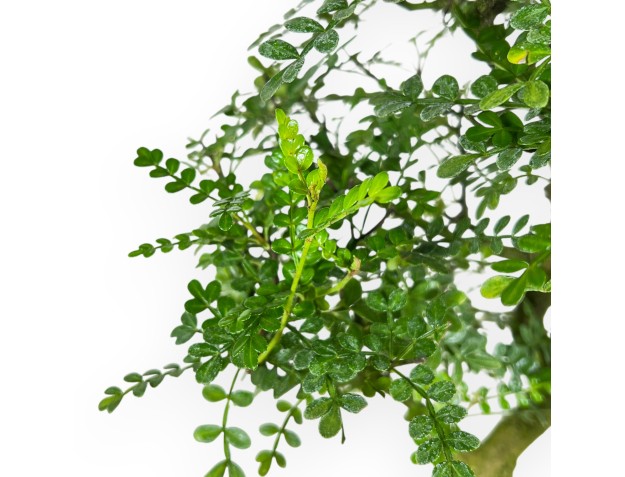
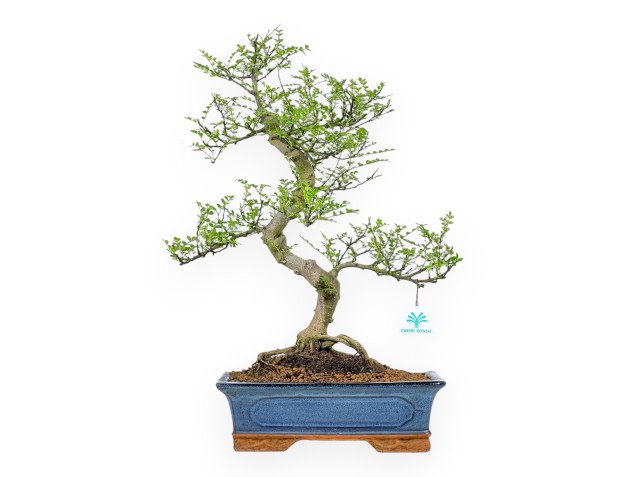
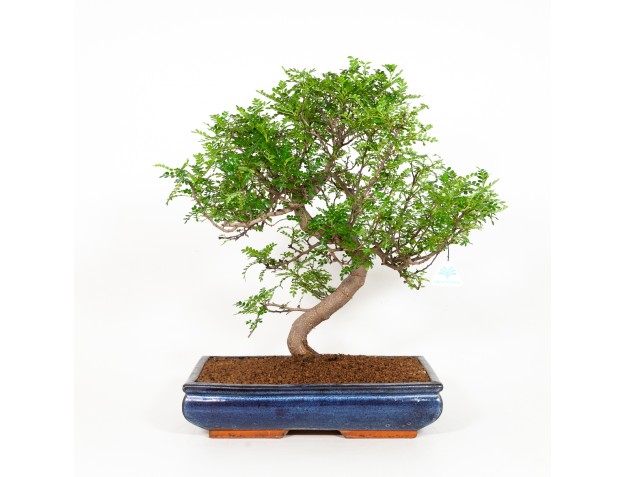
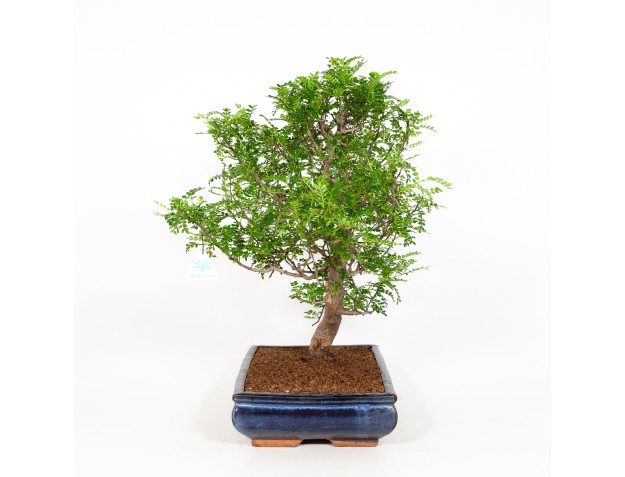
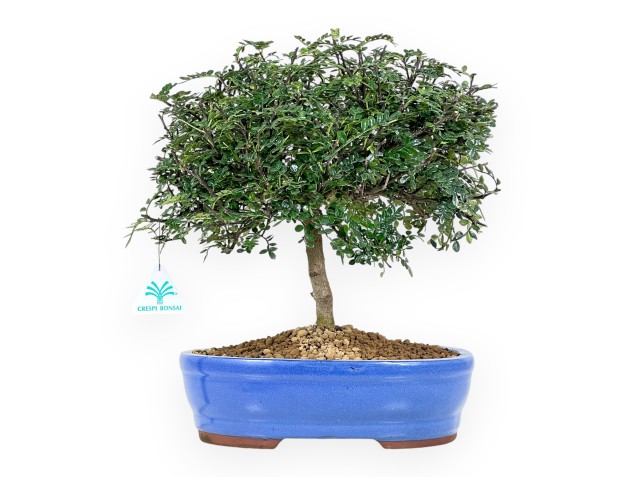
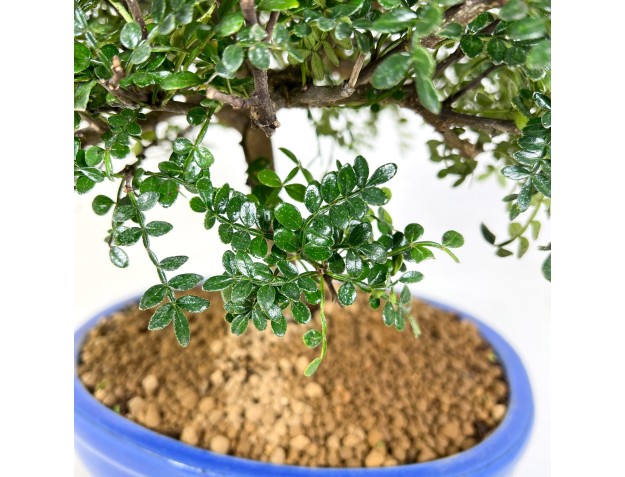
The species widespread in Italy is Schinus molle, also known as Falsopepe and the Pepper Tree. Morphologically, it is a fast-growing evergreen, weeping tree. In nature, it reaches up to 8 metres in height and width. It has fern-like leaves, consisting of numerous narrow elongated, glossy, deep green leaves. From the end of winter to summer they develop in open, tiny yellow clusters, followed by pea-sized, fuchsia-red fruits that gradually take on the classic dark shade of pepper. In bonsai training it is highly prized due to its harmonious proportions. In addition, the very small, deep green leaves and the distinctive bark, which gives it a mature appearance even at a young age, contribute to making it a particularly suitable species for bonsai art. The styles to which it is best suited are rockery and informal upright.

When training this species as a bonsai, it is important to remember that it is an indoor plant and therefore needs to be kept in a very bright spot during the winter months, with temperatures no lower than 10°C. From May to September, it is best to place it outdoors in a well-ventilated spot in partial shade.

The common rule of watering whenever the soil feels dry to the touch is also ideal for the pepper tree, but bear in mind that in hotter periods and in strong winds, you will need to water more frequently. In fact, in these cases, the soil often risks becoming completely dry. It is also important to bear in mind that both a lack of water and excess water can cause serious damage to the plant. More specifically, a lack of water causes the leaves to wilt and stunted growth, while excess water causes the tips of the leaves to turn black.

The best time to repot is in late spring, when the temperature is around 15°-20° C. Repot mature specimens every 3-4 years, while younger plants should be repotted every 1-2 years. The ideal mixture consists of 70% akadama and 30% sand.

When it comes to pruning, a distinction must be made: if it is maintenance pruning, there are no limitations, as the plant responds well at any time of year; if, on the other hand, you need to prune large branches, the best time to do so is in the fall, protecting the wounds with healing mastic.

To pinch back the Pepper tree, allow the shoots to grow to 8/10 leaves, then cut them back to 2/4, depending on where they are on the tree. To maintain the silhouette, pinch continuously with your fingers, removing the last two budding leaves from each shoot when it already has two leaves. This makes the branches particularly dense, so they will need to be thinned with scissors twice a year: in May and at the end of August.

Given the slow growth of this plant, even the twigs that appear thin are in many cases old and therefore fragile, so it will be necessary, if necessary, to use wire with the necessary precautions. Although the most appropriate time is spring, when the wood is less fragile, there are no restrictions on applying the wrapping throughout the rest of the year. The wire should be removed before it starts to cut into the bark. Obviously, as this is a slow-growing species, a growing season will have to pass.

When growth resumes (March-April), fertilize every 8-10 days, combining Bonsan Stimulating Action Fertilizer with Bonsan Organic Liquid Fertilizer. From April to September, fertilize every 8-10 days with Bonsan Organic Liquid Fertilizer or every 15-20 days with Bonsan Aburukasu Organic Solid Fertilizer, avoiding the months of July and August. From September to February, use Bonsan Organic Liquid Fertilizer every 15-20 days. To stimulate rooting, use Bonsan Organic Mineral Fluid Fertilizer with B vitamins instead of Bonsan Organic Liquid Fertilizer.

This species is not particularly prone to disease, but occasionally it can be attacked by aphids, scale insects, whiteflies, and red spider mites. If these pests are present, it is advisable to treat the plant with common pesticides, using the recommended doses indicated on the package and carrying out at least three treatments at ten-day intervals.

Advice on:
Location

When training this species as a bonsai, it is important to remember that it is an indoor plant and therefore needs to be kept in a very bright spot during the winter months, with temperatures no lower than 10°C. From May to September, it is best to place it outdoors in a well-ventilated spot in partial shade.

Watering

The common rule of watering whenever the soil feels dry to the touch is also ideal for the pepper tree, but bear in mind that in hotter periods and in strong winds, you will need to water more frequently. In fact, in these cases, the soil often risks becoming completely dry. It is also important to bear in mind that both a lack of water and excess water can cause serious damage to the plant. More specifically, a lack of water causes the leaves to wilt and stunted growth, while excess water causes the tips of the leaves to turn black.

Repotting

The best time to repot is in late spring, when the temperature is around 15°-20° C. Repot mature specimens every 3-4 years, while younger plants should be repotted every 1-2 years. The ideal mixture consists of 70% akadama and 30% sand.

Pruning

When it comes to pruning, a distinction must be made: if it is maintenance pruning, there are no limitations, as the plant responds well at any time of year; if, on the other hand, you need to prune large branches, the best time to do so is in the fall, protecting the wounds with healing mastic.

Pinching

To pinch back the Pepper tree, allow the shoots to grow to 8/10 leaves, then cut them back to 2/4, depending on where they are on the tree. To maintain the silhouette, pinch continuously with your fingers, removing the last two budding leaves from each shoot when it already has two leaves. This makes the branches particularly dense, so they will need to be thinned with scissors twice a year: in May and at the end of August.

Wiring

Given the slow growth of this plant, even the twigs that appear thin are in many cases old and therefore fragile, so it will be necessary, if necessary, to use wire with the necessary precautions. Although the most appropriate time is spring, when the wood is less fragile, there are no restrictions on applying the wrapping throughout the rest of the year. The wire should be removed before it starts to cut into the bark. Obviously, as this is a slow-growing species, a growing season will have to pass.

Fertilization

When growth resumes (March-April), fertilize every 8-10 days, combining Bonsan Stimulating Action Fertilizer with Bonsan Organic Liquid Fertilizer. From April to September, fertilize every 8-10 days with Bonsan Organic Liquid Fertilizer or every 15-20 days with Bonsan Aburukasu Organic Solid Fertilizer, avoiding the months of July and August. From September to February, use Bonsan Organic Liquid Fertilizer every 15-20 days. To stimulate rooting, use Bonsan Organic Mineral Fluid Fertilizer with B vitamins instead of Bonsan Organic Liquid Fertilizer.

Care

This species is not particularly prone to disease, but occasionally it can be attacked by aphids, scale insects, whiteflies, and red spider mites. If these pests are present, it is advisable to treat the plant with common pesticides, using the recommended doses indicated on the package and carrying out at least three treatments at ten-day intervals.

Filter by
Categories
Price
Style
Origin
Height
Height without pot
Filter
Zanthoxylum Piperitum - Pepper Tree - 33 cm Zanthoxylum Piperitum - Pepper Tree - 33 cm 2
Available
Indoor Bonsai

Zanthoxylum Piperitum - Pepper Tree - 33 cm

Albero del pepe - Zanthoxylum
C55PE-6116
€40.91
Les bonsaïs sont des êtres vivants et chacun est différent des autres, donc la plante que vous recevrez sera Bonsai are living beings and each one is different from the others, so the plant you'll receive will be similar but not the same as the one you see in the photo Height without pot: 26,5 cm - may vary with the vegetative growth of the plant Trunk:...
Indoor Bonsai

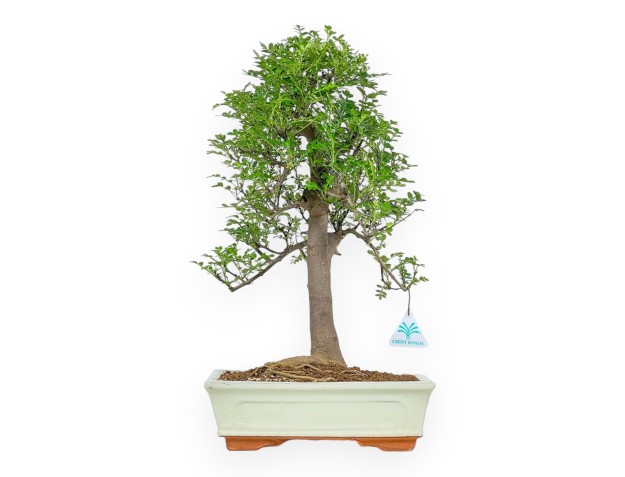
Zanthoxylum - Pepper tree - 46 cm

Albero del pepe - Zanthoxylum
C55LME-7050
€122.73
Pepper tree bonsai characterized by a height without pot of 38,5 cm, a trunk size of 2 cm and a nebari of 7 cm. The plant is grown in a rectangular glazed stoneware pot whose dimensions are 25x15,5xH7,5 cm.
Pepper tree bonsai 37 cm | Blue rectangular pot Pepper tree bonsai 37 cm | Blue rectangular pot 2
Out-of-Stock
Indoor Bonsai

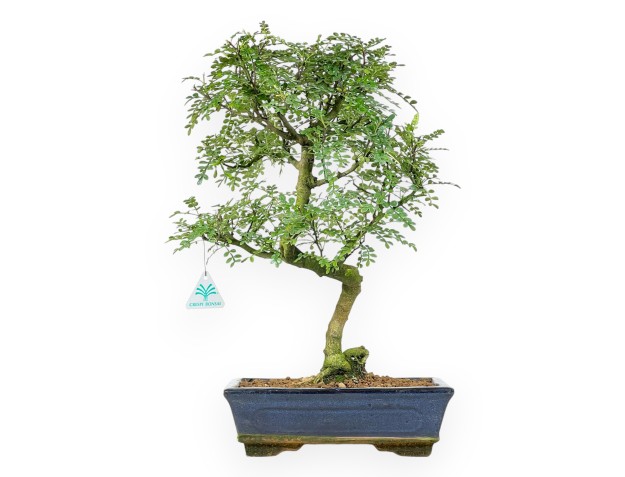
Zanthoxylum - Pepper tree - 37 cm

Albero del pepe - Zanthoxylum
C55OT-7049
€78.18
Pepper tree bonsai characterized by a height without pot of 28 cm, and trunk size of 1,5 cm. The plant is grown in an rectangular glazed stoneware pot whose dimensions are 26x20xH9 cm.
Indoor Bonsai

Zanthoxylum Piperitum - Pepper Tree - 50 cm

Albero del pepe - Zanthoxylum
C55LEI-6080
€136.36
Bonsai trees are living beings and each one is different from the others, so the plant you receive will be very similar but not the same as the one you see in the picture Height without pot: 42 cm Trunk: 2 cm Glazed stoneware pot: 28 x 17,5 x H 8 cm
Zanthoxylum Piperitum - Pepper Tree - 53 cm Zanthoxylum Piperitum - Pepper Tree - 53 cm 2
Available
Indoor Bonsai

Zanthoxylum Piperitum - Pepper Tree - 53 cm

Albero del pepe - Zanthoxylum
C55LNE-6134
€177.27
Bonsai are living beings and each one is different from the others, so the plant you receive will be similar but not the same as the one you see in the photograph Appearance may vary according to the seasons Height without pot: 44 cm Trunk: 2.5 cm Nebari: 17 cm Pot: 28.5 x 17 x 8.5 cm
Indoor Bonsai

Zanthoxylum - Pepper tree - 37 cm

Albero del pepe - Zanthoxylum
C55OT-7047
€78.18
Pepper tree bonsai characterized by a height without pot of 29,5 cm, and trunk size of 1,5 cm. The plant is grown in an oval glazed stoneware pot whose dimensions are 25,5x21xH7,5 cm.
Zanthoxylum - Pepper tree - 46 cm
Available
Indoor Bonsai

Zanthoxylum - Pepper tree - 46 cm

Albero del pepe - Zanthoxylum
C55LIE-6131
€95.45
Bonsai are living beings and each one is different from the others, so the plant you receive will be similar but not the same as the one you see in the photograph Appearance may vary according to the seasons Height without pot: 39 cm Trunk: 2.5 cm Nebari: 9 cm Pot: 24.5 x 15.5 x 7.5 cm
Zanthoxylum Piperitum - Pepper Tree - from 36 to 28 cm Zanthoxylum Piperitum - Pepper Tree - from 36 to 28 cm 2
Available
Indoor Bonsai

Zanthoxylum Piperitum - Pepper Tree - from 36 to 28 cm

Albero del pepe - Zanthoxylum
C55EI-6117
€45.45
Les bonsaïs sont des êtres vivants et chacun est différent des autres, donc la plante que vous recevrez sera Bonsai are living beings and each one is different from the others, so the plant you'll receive will be similar but not the same as the one you see in the photo Height without pot: from 29,5 to 21,5 cm - may vary with the vegetative growth of the...
Product added to wishlist