Error!

Azalea - Rhododendron

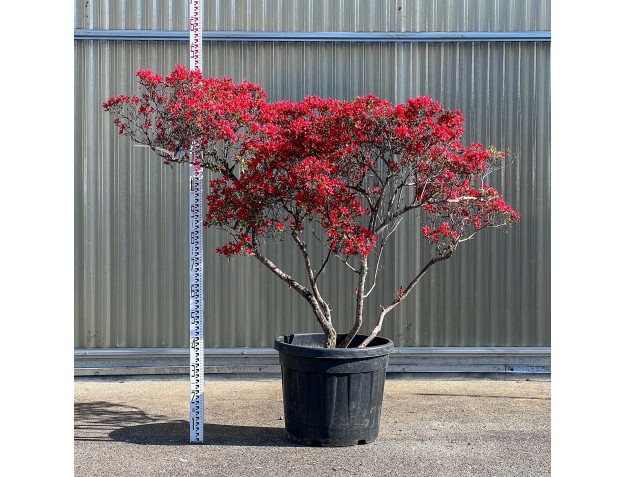
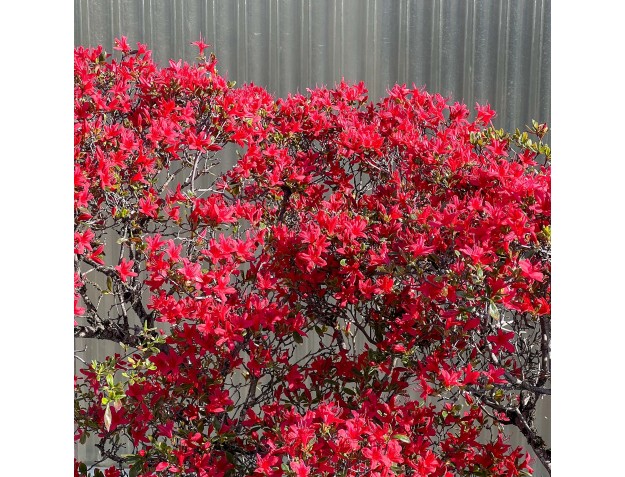
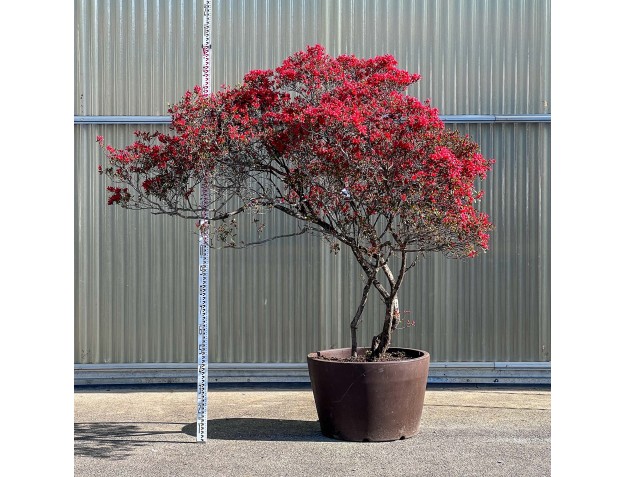
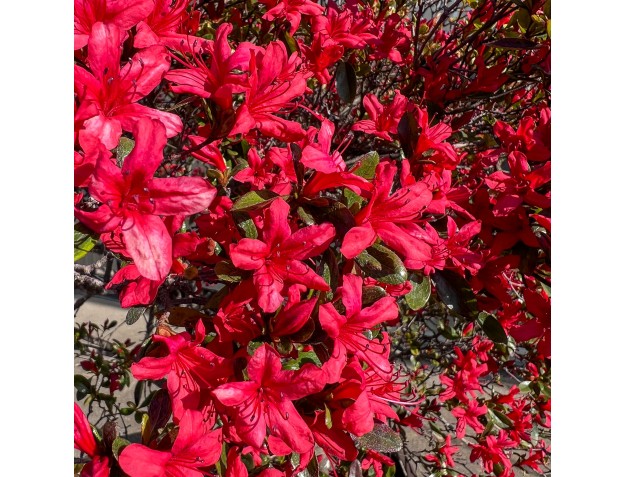
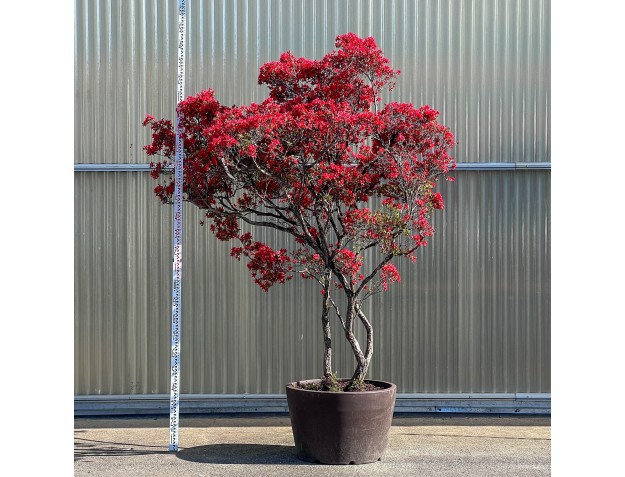
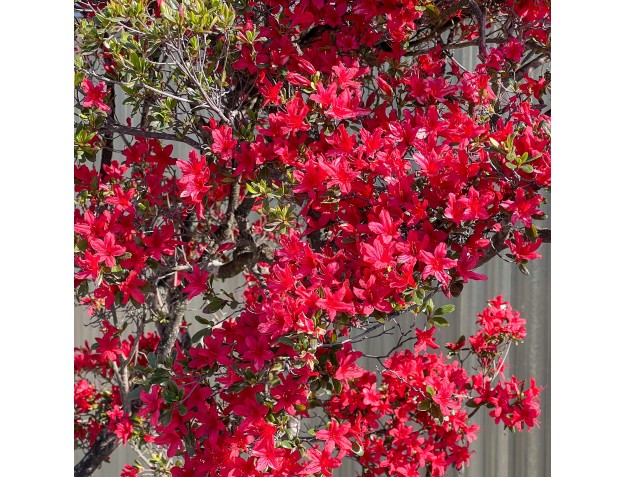
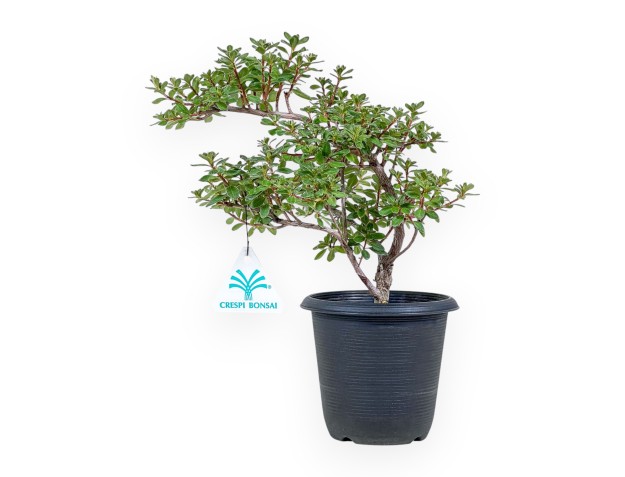
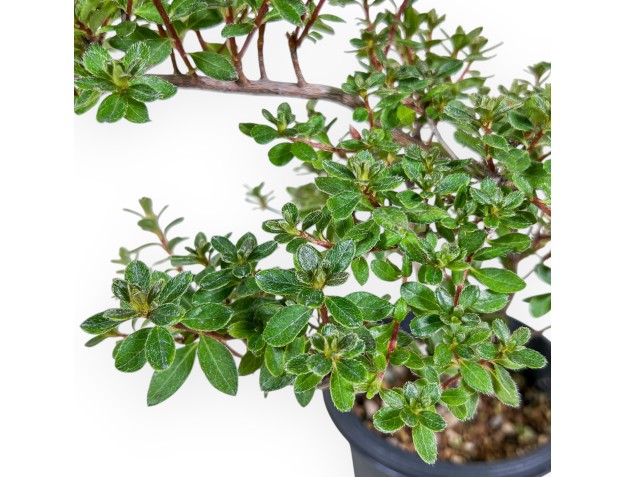
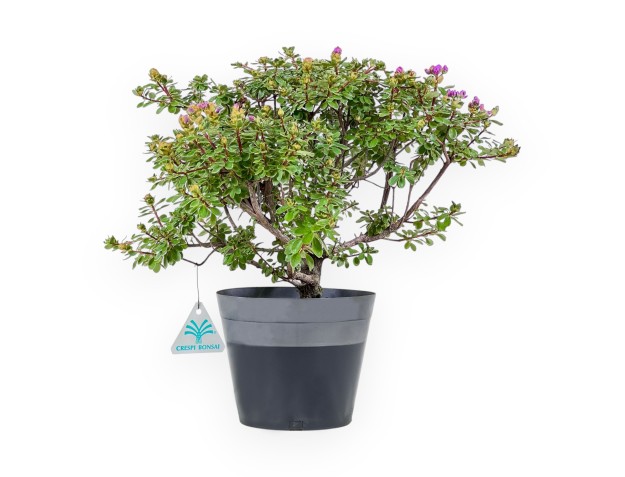
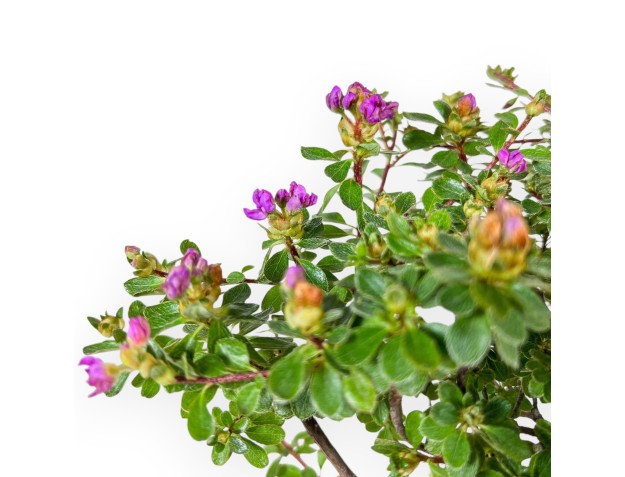
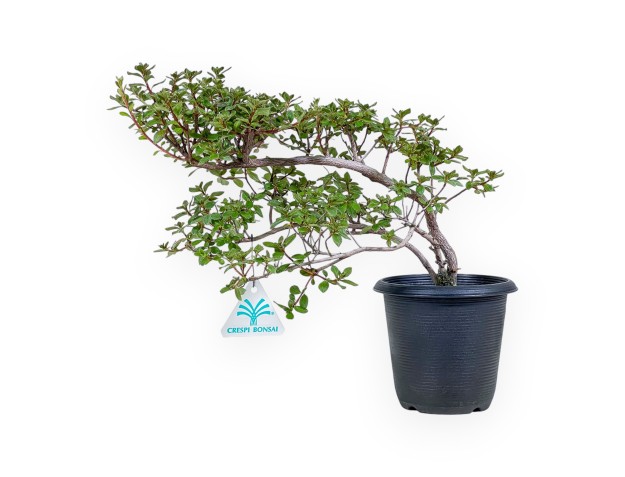
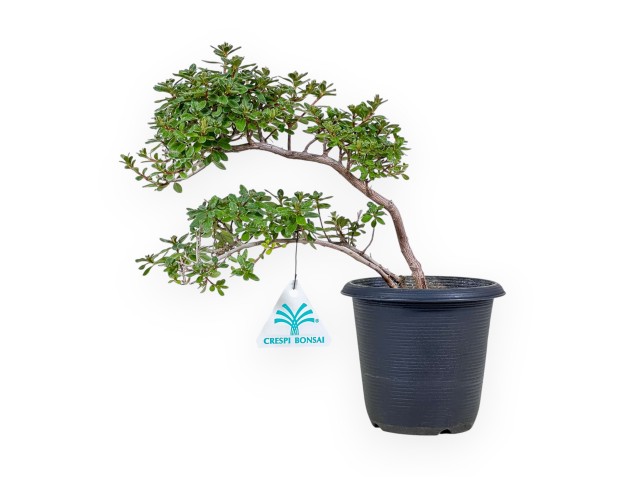
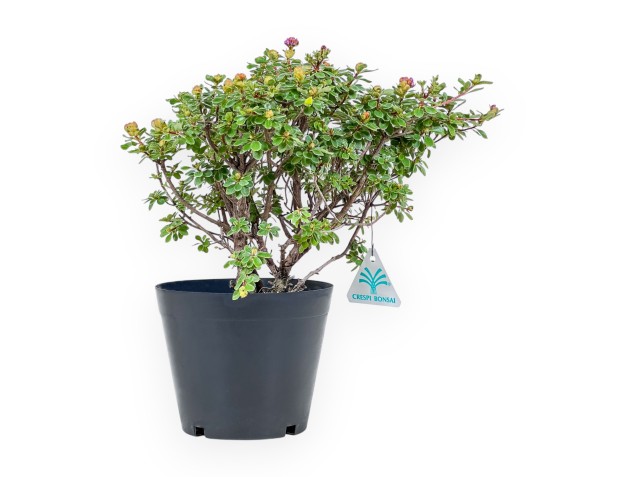
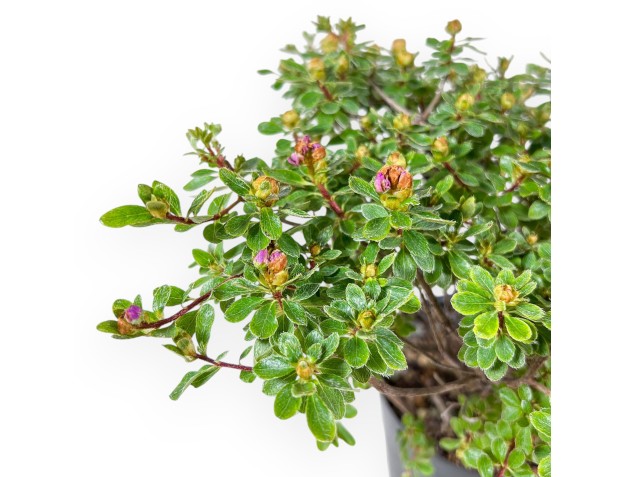
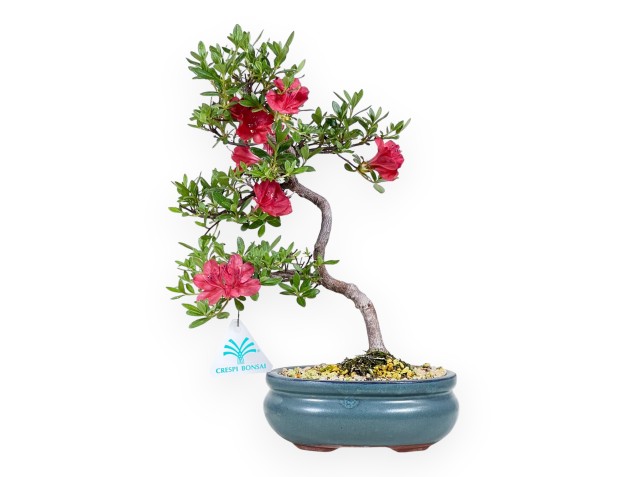
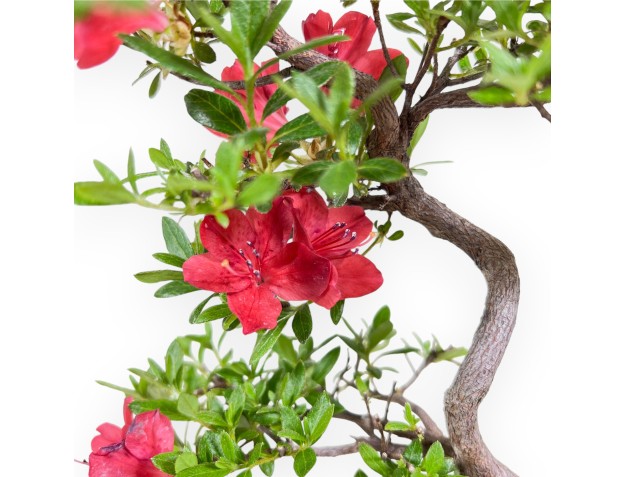
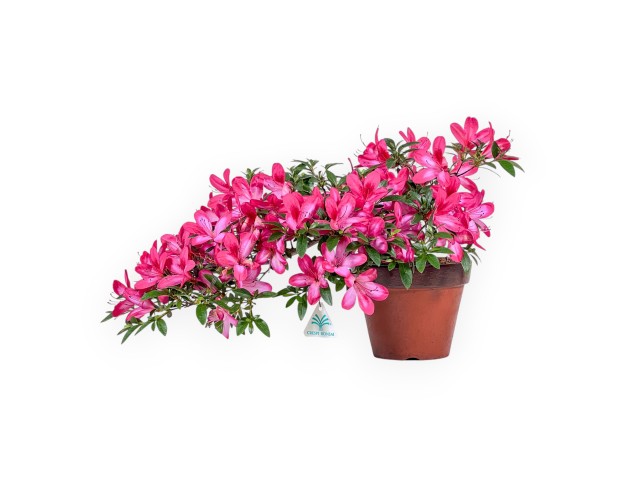
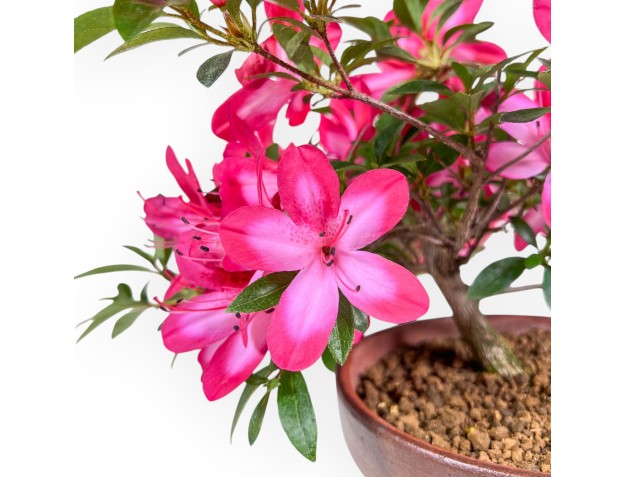
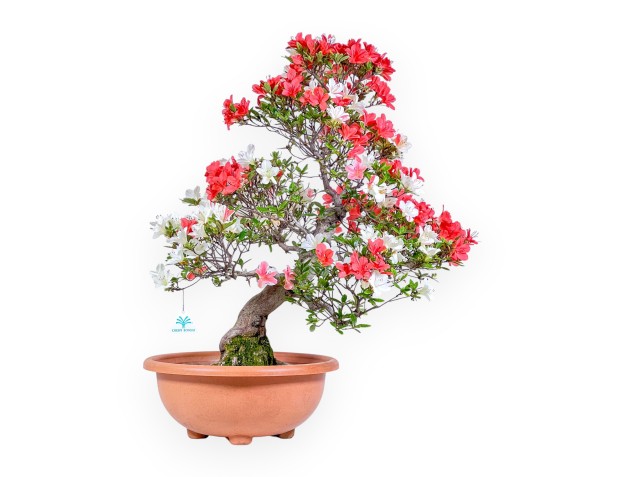
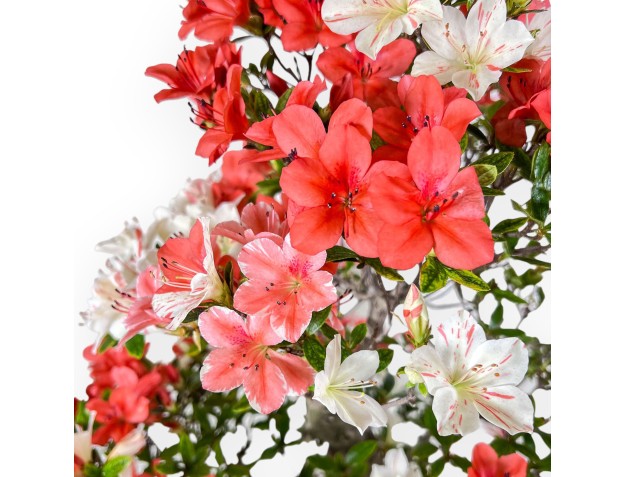
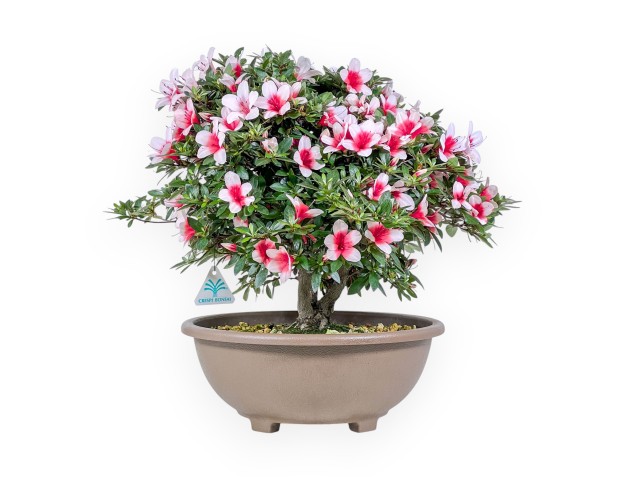
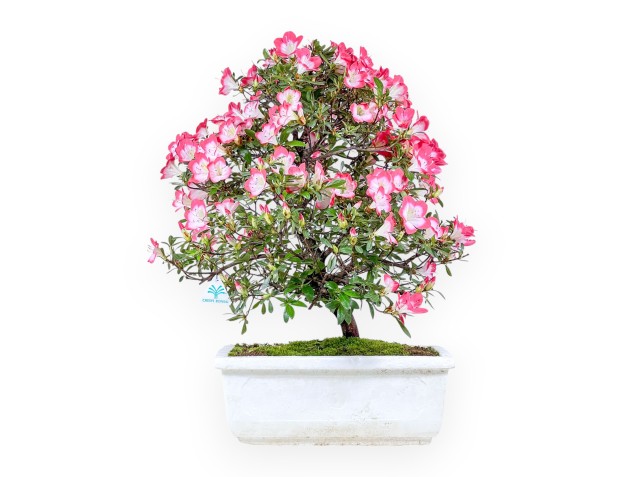
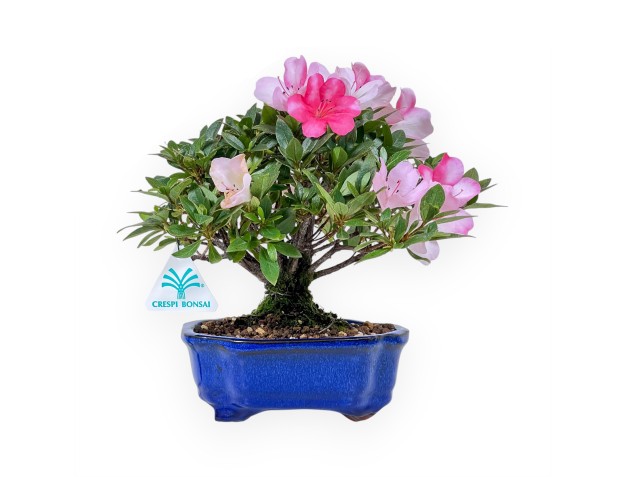
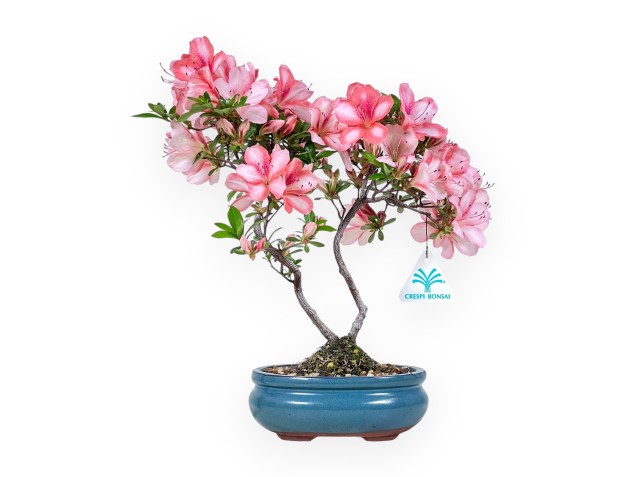
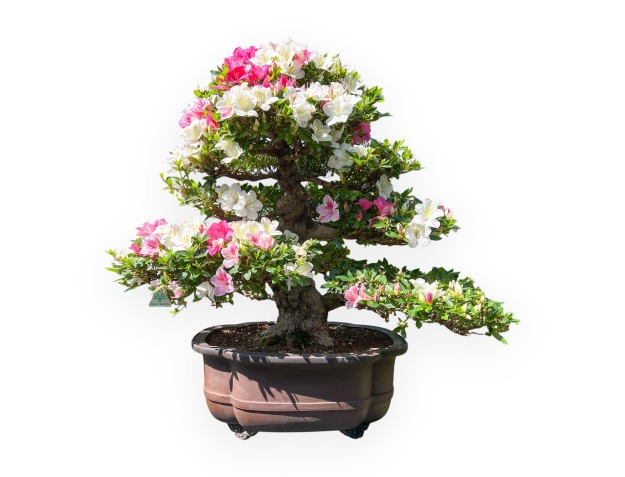
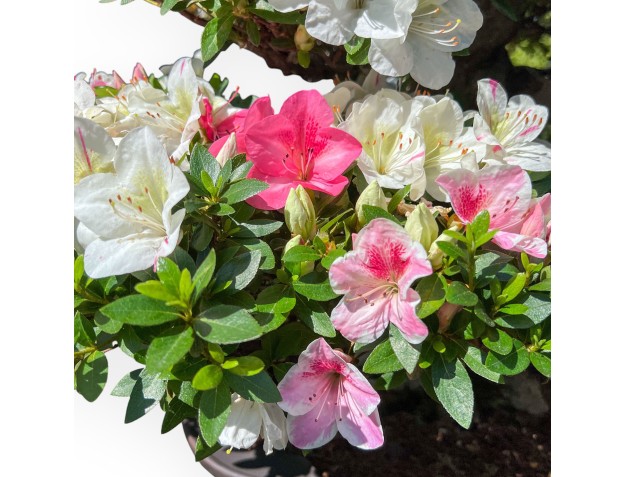
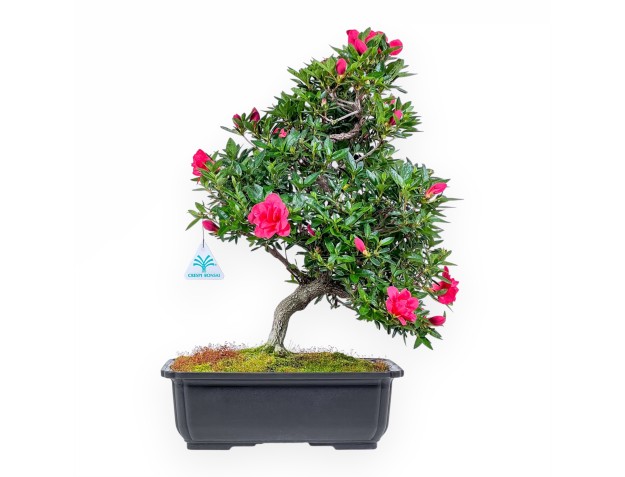
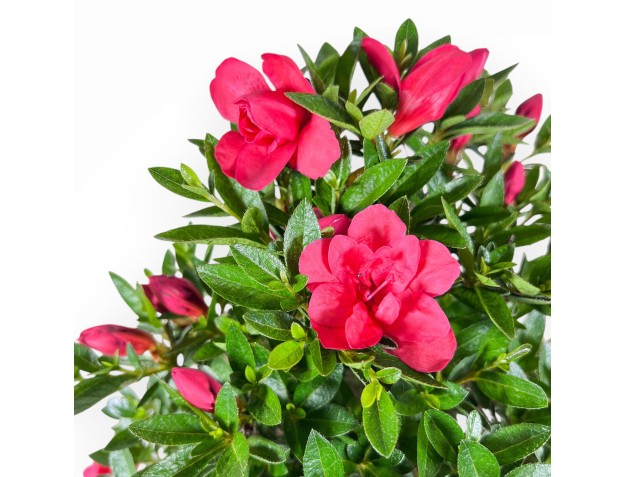
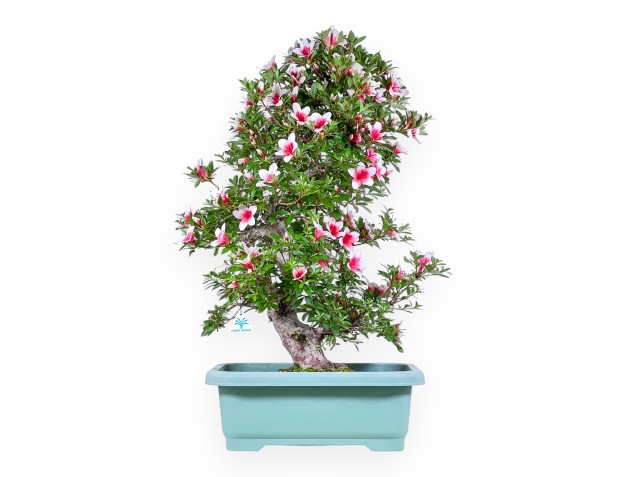
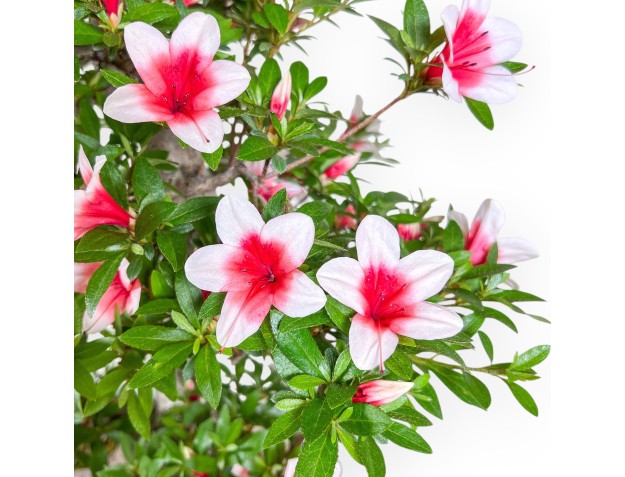
In Japan, the Azalea symbolises spring; in the same way as Maples and Pines, it is one of the most widely used essences for creating bonsai in its many varieties, as it possesses all the ideal characteristics: small, deciduous or perennial leaves, a pleasing, wrinkled trunk, a good nebari, rapid growth and above all, it is particularly suitable for pole forms. Thanks to the ease with which it sprouts in any part of the stem, even drastic pruning can be applied. Another aspect that makes it rather interesting for bonsai cultivation is that it can be shaped into almost any style.

In areas with a mild climate, azaleas can be safely placed outdoors all year round. However, in areas subject to colder temperatures, they need to be protected, for example by placing them in a cold greenhouse, at least during periods of frost. During the summer, this species tolerates the high temperatures of the hottest days quite well, although it is always best to provide shelter from direct sunlight, otherwise the leaves take on a reddish color and lose much of their shine. Furthermore, in case of excessive sun exposure, there is a risk of dehydration and failure to assimilate fertilizer, resulting in spotting on the edges of the leaves, similar to that caused by fungi. It is important to keep in mind that Azaleas also benefit from a well-ventilated location. If you want to keep it indoors for a while to fully enjoy its spectacular flowering, you can do so, provided it is for a very limited period: a maximum of 4 days.

Azaleas do not like hard water: if this problem arises, it is best to use a descaling product such as those in the Bonsan range. As for how often to water, a distinction must be made depending on the season: during the growing season, until the end of July, watering should be very abundant, while after flowering, it should be more moderate. However, it is important never to let the soil dry out completely, even in winter (including the coldest months), as its thin fibrous roots dehydrate easily. Ensuring the right amount of water for azaleas is very important in order to avoid cultivation problems: overwatering leads to weak and long growth, with consequent leaf fall; under-watering causes stunted growth, with twisted, yellow leaves that will fall, along with the buds.

The best time for transplanting is immediately after flowering, because if done earlier, the plant would weaken at the expense of flower production. Young specimens should be transplanted every 2 years, while for more mature ones, every 3 or 4 years will suffice. Azaleas tolerate root pruning well, and after the operation they generally produce numerous capillary roots in a short time. Before transplanting, remove the soil from the top and bottom of the stump, paying particular attention to the central area under the tree trunk, where it is easy to find rotting roots and dry, compact soil. At this point, prune one-third of the roots, giving priority to the thickest ones. The cuts resulting from the operation should be treated with healing mastic. The optimal compound is kanuma.

Since these are fast-growing plants, it won't take long for them to develop good branching. Before flowering, the branches must be thinned out, pruning the shoots that grow directly upwards or downwards; in an already formed plant, even the strongest shoots must be cut. When the tree is about to flower, in order to avoid excessive stress on the tree, a selection of buds is made. Every 12-13 years, to reinvigorate the plant and obtain the best possible flowering, the Japanese recommend completely removing the main branches and starting the shaping process again. When pruning, care must be taken to prune the apex less than other parts of the tree, as this is the weakest area.

This is done to help stimulate the growth of new branches and keep the bonsai's foliage compact and well-structured. This practice consists of gently removing the tips of new shoots, which are still soft. It should be done throughout the growing season, from spring to summer, but not during flowering, as the flower buds could be damaged. The operation should be carried out regularly, every 2-3 weeks, when the new shoots are still young, and consists of removing about 2-4 leaves to stimulate denser growth and reduce overly long internodes, which could compromise the shape of the bonsai.

The best time to apply the wire is after flowering because, having pruned, the structure of the tree is more visible. Copper wire is the most suitable because it is stiffer than copper-coated aluminum wire and therefore provides a better hold, especially for thick branches. To achieve good results without taking any risks with this technique, it is important to bear in mind that azalea wood is very delicate and therefore young branches should not be wrapped. One tip to keep in mind when applying the wire is to cover it with florist's tape to avoid leaving marks on the bark. You should also take care to remove it as soon as it starts to cut into the bark. For thick, vigorous branches, it is better not to use wire to shape them, but rather tie rods and weights.

At the end of flowering, after pruning, apply Bonsan Stimulating Fertilizer combined with Bonsan Liquid Organic Fertilizer three times every 8-10 days. During other periods, use Bonsan Hanagokoro Solid Organic Fertilizer every 15-25 days, excluding July and August. Twice a year (in autumn and at the end of winter), apply Bonsan Hanagokoro Solid Organic Fertilizer. It is also advisable to apply Bonsan Mineral Curative Solution 6-8 times a year. To stimulate rooting, use Bonsan Organic Mineral Liquid Fertilizer with B vitamins instead of Bonsan Organic Liquid Fertilizer.

The diseases to which azaleas are most frequently susceptible are: scale insects, aphids, mites, red spider mites, and sooty mold. To prevent these pests from attacking the plant, simply follow the correct maintenance rules, especially with regard to exposure and watering. However, if they do appear, they can be easily eradicated by applying specific products. However, to avoid having to treat the plant once it has already been attacked, it is advisable to carry out appropriate preventive treatments periodically.

Advice on:
Location

In areas with a mild climate, azaleas can be safely placed outdoors all year round. However, in areas subject to colder temperatures, they need to be protected, for example by placing them in a cold greenhouse, at least during periods of frost. During the summer, this species tolerates the high temperatures of the hottest days quite well, although it is always best to provide shelter from direct sunlight, otherwise the leaves take on a reddish color and lose much of their shine. Furthermore, in case of excessive sun exposure, there is a risk of dehydration and failure to assimilate fertilizer, resulting in spotting on the edges of the leaves, similar to that caused by fungi. It is important to keep in mind that Azaleas also benefit from a well-ventilated location. If you want to keep it indoors for a while to fully enjoy its spectacular flowering, you can do so, provided it is for a very limited period: a maximum of 4 days.
Watering

Azaleas do not like hard water: if this problem arises, it is best to use a descaling product such as those in the Bonsan range. As for how often to water, a distinction must be made depending on the season: during the growing season, until the end of July, watering should be very abundant, while after flowering, it should be more moderate. However, it is important never to let the soil dry out completely, even in winter (including the coldest months), as its thin fibrous roots dehydrate easily. Ensuring the right amount of water for azaleas is very important in order to avoid cultivation problems: overwatering leads to weak and long growth, with consequent leaf fall; under-watering causes stunted growth, with twisted, yellow leaves that will fall, along with the buds.

Repotting

The best time for transplanting is immediately after flowering, because if done earlier, the plant would weaken at the expense of flower production. Young specimens should be transplanted every 2 years, while for more mature ones, every 3 or 4 years will suffice. Azaleas tolerate root pruning well, and after the operation they generally produce numerous capillary roots in a short time. Before transplanting, remove the soil from the top and bottom of the stump, paying particular attention to the central area under the tree trunk, where it is easy to find rotting roots and dry, compact soil. At this point, prune one-third of the roots, giving priority to the thickest ones. The cuts resulting from the operation should be treated with healing mastic. The optimal compound is kanuma.

Pruning

Since these are fast-growing plants, it won't take long for them to develop good branching. Before flowering, the branches must be thinned out, pruning the shoots that grow directly upwards or downwards; in an already formed plant, even the strongest shoots must be cut. When the tree is about to flower, in order to avoid excessive stress on the tree, a selection of buds is made. Every 12-13 years, to reinvigorate the plant and obtain the best possible flowering, the Japanese recommend completely removing the main branches and starting the shaping process again. When pruning, care must be taken to prune the apex less than other parts of the tree, as this is the weakest area.

Pinching

This is done to help stimulate the growth of new branches and keep the bonsai's foliage compact and well-structured. This practice consists of gently removing the tips of new shoots, which are still soft. It should be done throughout the growing season, from spring to summer, but not during flowering, as the flower buds could be damaged. The operation should be carried out regularly, every 2-3 weeks, when the new shoots are still young, and consists of removing about 2-4 leaves to stimulate denser growth and reduce overly long internodes, which could compromise the shape of the bonsai.

Wiring

The best time to apply the wire is after flowering because, having pruned, the structure of the tree is more visible. Copper wire is the most suitable because it is stiffer than copper-coated aluminum wire and therefore provides a better hold, especially for thick branches. To achieve good results without taking any risks with this technique, it is important to bear in mind that azalea wood is very delicate and therefore young branches should not be wrapped. One tip to keep in mind when applying the wire is to cover it with florist's tape to avoid leaving marks on the bark. You should also take care to remove it as soon as it starts to cut into the bark. For thick, vigorous branches, it is better not to use wire to shape them, but rather tie rods and weights.

Fertilization

At the end of flowering, after pruning, apply Bonsan Stimulating Fertilizer combined with Bonsan Liquid Organic Fertilizer three times every 8-10 days. During other periods, use Bonsan Hanagokoro Solid Organic Fertilizer every 15-25 days, excluding July and August. Twice a year (in autumn and at the end of winter), apply Bonsan Hanagokoro Solid Organic Fertilizer. It is also advisable to apply Bonsan Mineral Curative Solution 6-8 times a year. To stimulate rooting, use Bonsan Organic Mineral Liquid Fertilizer with B vitamins instead of Bonsan Organic Liquid Fertilizer.

Care

The diseases to which azaleas are most frequently susceptible are: scale insects, aphids, mites, red spider mites, and sooty mold. To prevent these pests from attacking the plant, simply follow the correct maintenance rules, especially with regard to exposure and watering. However, if they do appear, they can be easily eradicated by applying specific products. However, to avoid having to treat the plant once it has already been attacked, it is advisable to carry out appropriate preventive treatments periodically.

Filter by
Categories
Price
Style
Origin
Height
Height without pot
Filter
Rhododendron Indicum - Azalea - 23 cm Rhododendron Indicum - Azalea - 23 cm 2
Available
Flower Bonsai

Rhododendron Indicum - Azalea - 23 cm

Azalea - Rhododendron
Y45LNE-5504
€177.27
Appearance may change according to the seasons Shohin Style: slanted Height without pot: 15 cm Trunk: 1 cm Nebari: 4 cm Glazed stoneware pot: 8,5 x 8,5 x H 8 cm
Rhododendron Indicum Hanabin - Azalea - 39 cm Rhododendron Indicum Hanabin - Azalea - 39 cm 2
Available
Flower Bonsai

Rhododendron Indicum Hanabin - Azalea - 39 cm

Azalea - Rhododendron
Y45MNE-6637
€359.09
Appearance may change according to the seasons Stile: exposed roots Height without pot: 30 cm Trunk: 3 cm Nebari: 10 cm Unglazed growing pot: Ø 15 x H 9 cm
Rhododendron Indicum Nomugitoge - Azalea - 60 cm Rhododendron Indicum Nomugitoge - Azalea - 60 cm 2
Available
Flower Bonsai

Rhododendron Indicum Nomugitoge - Azalea - 60 cm

Azalea - Rhododendron
Y45LNE-3
€177.27
Appearance may change according to the seasons Style: informal upright Height without pot: 53 cm Trunk: 2 cm Glazed stoneware pot: 20 x 16 x H 7 cm
Rhododendron Indicum - Azalea - 45 cm Rhododendron Indicum - Azalea - 45 cm 2
Out-of-Stock
Flower Bonsai

Rhododendron Indicum - Azalea - 45 cm

Azalea - Rhododendron
Y45LTE-6589
€150.00
Appearance may change according to the seasons Bonsai are living beings and each one is different from the others, so the plant you'll receive will be similar but not the same as the one you see in the photo Height without pot: 38 cm - may vary with the vegetative growth of the plant Trunk: 2,5 cm Nebari: 8 cm Glazed stoneware pot: 21 x 15,5 x H 7 cm
Gift sets

Azalea Set & Miniguide

Azalea - Rhododendron
SET136087
€31.82
The set consists of Rhododendron Indicum bonsai and Miniguide AZALEA BONSAI: Bonsai are living beings and each one is different from the others, so the plant you'll receive will be similar but not the same as the one you see in the photo Height with pot: 27 cm Height without pot: 21,5 cm - may vary with the vegetative growth of the plant Trunk: 1...
Rhododendron Indicum - Azalea - 53 cm Rhododendron Indicum - Azalea - 53 cm 2
Available
Flower Bonsai

Rhododendron Indicum - Azalea - 53 cm

Azalea - Rhododendron
Y45LEI-6559
€136.36
Appearance may change according to the seasons Height without pot: 43 cm Trunk: 1,5 cm Nebari: 3 cm Plastic pot: Ø 19 x H 10 cm
Rhododendron Indicum Asahi-no-Izumi - Azalea - 86 cm Rhododendron Indicum Asahi-no-Izumi - Azalea - 86 cm 2
Available
Masterpiece Bonsai

Rhododendron Indicum Asahi-no-Izumi - Azalea - 86 cm

Azalea - Rhododendron
Y45MOII-5578
€3,454.55
Appearance may change according to the seasons Unique specimen Style: informal upright Height without pot: 74 cm Trunk: 13 cm Nebari: 30 cm Unglazed stoneware pot: 46 x 34 x H 12 cm For courier delivery or more information contact us
Rhododendron Indicum Hakatajiro - Azalea - 58 cm Rhododendron Indicum Hakatajiro - Azalea - 58 cm 2
Available
Flower Bonsai

Rhododendron Indicum Hakatajiro - Azalea - 58 cm

Azalea - Rhododendron
Y45LOI-28
€163.64
Appearance may change according to the seasons Style: informal upright Height without pot: 49,5 cm Trunk: 2 cm Nebari: 5 cm Glazed stoneware pot: 24,5 x 18 x H 8,5 cm
Rhododendron Indicum Hanabin - Azalea - 61 cm Rhododendron Indicum Hanabin - Azalea - 61 cm 2
Available
Flower Bonsai

Rhododendron Indicum Hanabin - Azalea - 61 cm

Azalea - Rhododendron
Y45LOL-5511
€164.55
Appearance may change according to the seasons Height without pot: 54 cm Trunk: 2,5 cm Nebari: 6 cm Glazed stoneware pot: 20,5 x 15,5 x H 7 cm
Rhododendron Indicum - Azalea - 29 cm Rhododendron Indicum - Azalea - 29 cm 2
Available
Flower Bonsai

Rhododendron Indicum - Azalea - 29 cm

Azalea - Rhododendron
Y45OT-6549
€78.18
Appearance may change according to the seasons Style: semi cascade Height without pot: 20 cm Trunk: 0,7 cm Plastic pot: Ø 10 x H 9 cm
Rhododendron Indicum Juko - Azalea - 93 cm Rhododendron Indicum Juko - Azalea - 93 cm 2
Available
Masterpiece Bonsai

Rhododendron Indicum Juko - Azalea - 93 cm

Azalea - Rhododendron
Y45AMII-5563
€2,090.91
Appearance may change according to the seasons Unique specimen Style: informal upright Height without pot: 79 cm Trunk: 10 cm Nebari: 20 cm Unglazed stoneware pot: 46 x 38 x H 14 cm For courier delivery or more information contact us
Rhododendron Indicum - Azalea - 24 cm Rhododendron Indicum - Azalea - 24 cm 2
Available
Shohin Bonsai

Rhododendron Indicum - Azalea - 24 cm

Azalea - Rhododendron
Y45LII-5437
€90.91
Appearance may change according to the seasons Shohin Style: informal upright Height without pot: 19,5 cm Trunk: 1,5 cm Nebari: 4 cm Glazed stoneware pot: 15,5 x 12 x H 4,5 cm
Rhododendron Indicum Saotone - Azalea - 20 cm Rhododendron Indicum Saotone - Azalea - 20 cm 2
Available
Flower Bonsai

Rhododendron Indicum Saotone - Azalea - 20 cm

Azalea - Rhododendron
Y45PTE-6642
€422.73
Appearance may change according to the seasons Height without pot: 15 cm Trunk: 1,5 cm Nebari: 2,5 cm Glazed stoneware pot: 16 x 12 x H 5 cm
Rhododendron Indicum Korin - Azalea - 87 cm Rhododendron Indicum Korin - Azalea - 87 cm 2
Available
Masterpiece Bonsai

Rhododendron Indicum Korin - Azalea - 87 cm

Azalea - Rhododendron
Y45OTII-5629
€7,818.18
Unique specimen Appearance may change according to the seasons Style: broom Height without pot: 72,5 cm Trunk: 16 cm Nebari: 15 cm Unglazed stoneware pot: 51 x 43 x H 14,5 cm For courier delivery or more information contact us
Rhododendron Indicum - Azalea - 27,5 cm Rhododendron Indicum - Azalea - 27,5 cm 2
Available
Shohin Bonsai

Rhododendron Indicum - Azalea - 27,5 cm

Azalea - Rhododendron
Y45LII-5440
€90.91
The appearance may vary according to the seasons Shohin Style: informal upright Height without pot: 19,5 cm Trunk: 1 cm Unglazed stoneware pot: 8,5 x 8,5 x H 8 cm
Rhododendron Indicum - Azalea - 25 cm Rhododendron Indicum - Azalea - 25 cm 2
Available
Flower Bonsai

Rhododendron Indicum - Azalea - 25 cm

Azalea - Rhododendron
Y45OT-6553
€78.18
Appearance may change according to the seasons Style: semi cascade Height without pot: 16 cm Trunk: 0,5 cm Plastic pot: Ø 10 x H 9 cm
Rhododendron Indicum Koto no Mai - Azalea - 53 cm Rhododendron Indicum Koto no Mai - Azalea - 53 cm 2
Available
Flower Bonsai

Rhododendron Indicum Koto no Mai - Azalea - 53 cm

Azalea - Rhododendron
Y45LNE-8
€177.27
Appearance may change according to the seasons Style: informal upright Height without pot: 43,5 cm Trunk: 2 cm Glazed stoneware pot: 20 x 17 x H 8,5 cm
Rhododendron Indicum Wakaebisu - Azalea - 60 cm Rhododendron Indicum Wakaebisu - Azalea - 60 cm 2
Available
Flower Bonsai

Rhododendron Indicum Wakaebisu - Azalea - 60 cm

Azalea - Rhododendron
Y45LOI-6562
€163.64
Appearance may change according to the seasons Height without pot: 52 cm Trunk: 3 cm Nebari: 9 cm Glazed stoneware pot: 24,5 x 18,5 x H 8 cm
Flower Bonsai

Rhododendron Indicum - Azalea - 19 cm

Azalea - Rhododendron
Y45TE-5517
€59.09
Appearance may change according to the seasons Shohin Bonsai are living beings and each one is different from the others, so the plant you'll receive will be similar but not the same as the one you see in the photo Style: stump Height without pot: 13 cm - may vary with the vegetative growth of the plant Glazed stoneware pot: 13 x 11 x H 6 cm
Rhododendron Indicum Kozan - Azalea - 57 cm Rhododendron Indicum Kozan - Azalea - 57 cm 2
Available
Masterpiece Bonsai

Rhododendron Indicum Kozan - Azalea - 57 cm

Azalea - Rhododendron
Y45MNII-5570
€3,545.45
Appearance may change according to the seasons Unique specimen Style: broom Height without pot: 48 cm Trunk: 11 cm Nebari: 20 cm Glazed stoneware pot: 40 x 32 x H 9 cm For courier delivery or more information contact us
Product added to wishlist